
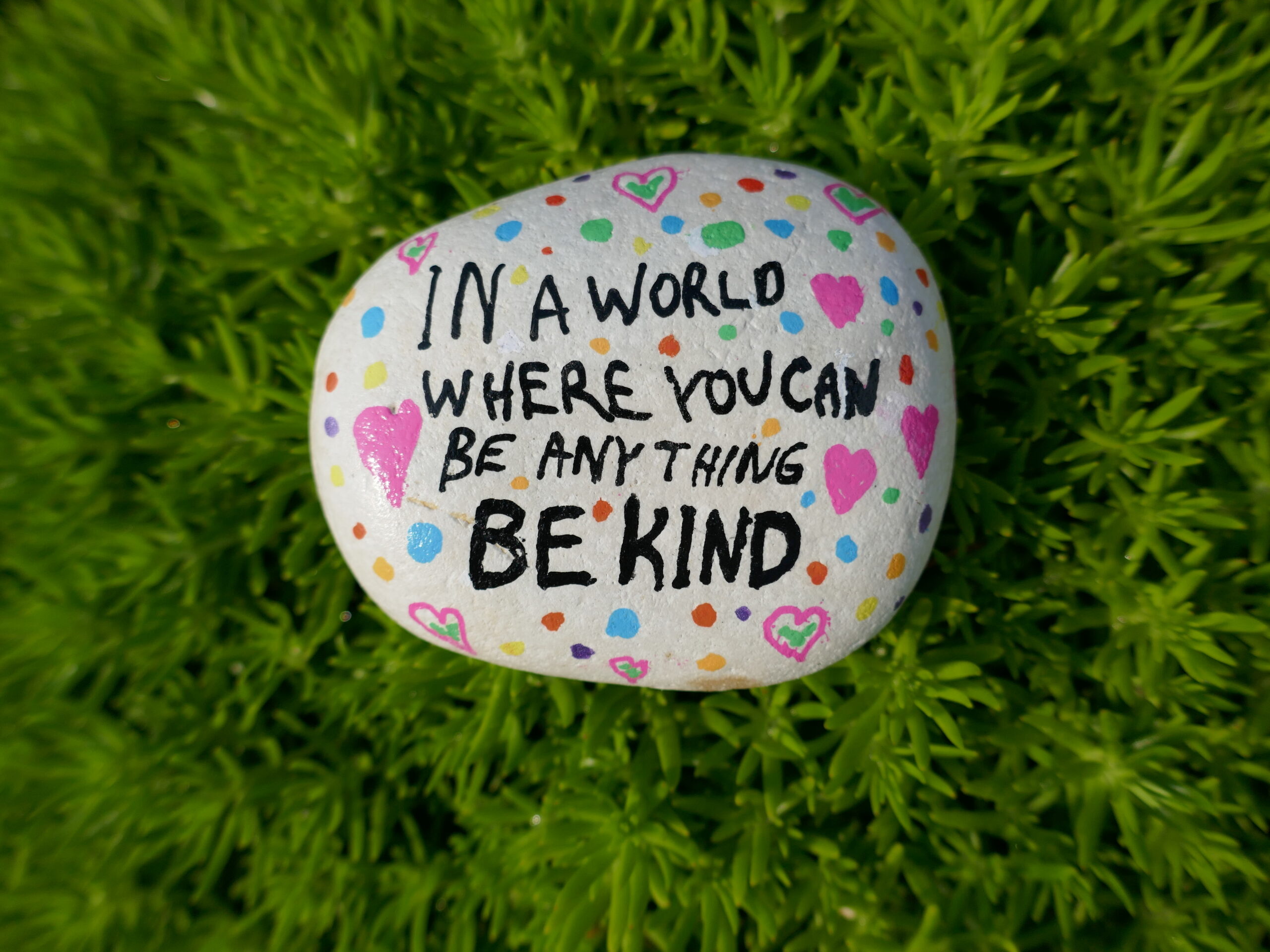
In this candid piece, Maureen O’Callaghan shows why kindness at work starts with self-kindness. From silencing the inner critic that shouldn’t be your coach, to setting boundaries and building support, she argues sustainable leadership means staying present and protecting capacity. Kindness is not a performative tool, it is what endures.
I used to stand at networking event doors, turn around three times, and leave. The voice in my head would say, ‘You’re boring. Nobody will be interested. Look how clever and successful they all are. You’re nowhere near as good as them.’ If you recognise that voice, you’ll know it doesn’t make you a better leader, trainer, or business owner. It just makes you exhausted and deflated.
The thing to know about kindness in leadership is that it starts with you and how you treat yourself
For years now, I’ve researched and taught about kindness in business, how it builds trust, creates high-performing teams, and promotes the kind of workplace culture people actually want to be part of. The thing to know about kindness in leadership is that it starts with you and how you treat yourself. If you don’t look after yourself, you don’t function as well, and when you’re running on empty, any kindness you extend to others becomes superficial at best, and unsustainable at worst.
The problem with putting yourself last
I’ve watched it happen time and again in charities, small businesses, and corporate settings. People pour everything into their teams, their clients, their communities, and then wonder why they’re burned out, resentful, or too depleted to show up as the leader they want to be.
There’s a Buddhist philosophy I come back to often which says that you look after yourself in order to be of service to others. You’re not doing it for selfish reasons, but to put yourself in the best possible position to help.
I really leaned on this when I was managing a high-performing team through an incredibly stressful organisational change. The change process was handled badly and while I wasn’t responsible for the resulting chaos, I was responsible for my team. I spent my time actively listening, acknowledging their feelings, and encouraging them to support one another. But I also had to establish boundaries. I couldn’t make myself available 24/7. I had to say, ‘the door’s open, but unless it’s an emergency, can it wait until morning?’
I wasn’t the person who gave hugs. I was the person who put the kettle on. I covered emails for a team member whose wife had postnatal depression. Not because I was able to do his entire job in his absence, but because covering him for two days was within my capacity. Real kindness in leadership is knowing what your strengths are, what you can sustain, and being honest about both.
What self-kindness actually looks like
Self-kindness isn’t just bubble baths and vision boards, though if that works for you, brilliant! For me, it’s much more practical. It’s punctuating my day with small self-care activities like going for coffee or a walk in nature and making sure I’m fully present. Not scrolling through emails while I drink my coffee but actually tasting it and looking out at the trees. Making that time to just be.
It’s also about how I speak to myself. I’ve had to learn to question that critical inner voice. Is it true? Where’s the evidence? Could there be another explanation? It’s about getting out of the habit of accepting lazy, habitual thinking as fact. It’s not at all easy!
Perhaps most importantly, it’s about not time-travelling: I could spend all day revisiting past mistakes or catastrophising about the future. But staying present, acknowledging what’s happening now, what support I need now, what I can expect of myself now, that’s what helps me most.
Being kind to yourself isn’t just a ‘nice thing to do’, it changes how you show up. By being less self-critical I didn’t necessarily become more confident, but I did become less afraid of difficult interactions. I learned I could bounce back. I became more creative, more willing to try different approaches. I got better at making decisions about who I work with and who I don’t. There’s a cost to working with people who create uncertainty and stress, and I’m no longer willing to pay it.
I’m going to say something I’m not entirely proud of…
I’ve also noticed something in my PhD research and through my work with business owners; kind leaders create the sort of atmosphere people want to be part of. They’re the ones who respond to your email query, offer you a lift to a meeting, and share information and contacts freely. I’m going to say something I’m not entirely proud of; I see kindness more in women than men. The women I know who lead with kindness tend to be happier, healthier, and build stronger, more loyal networks.
You can always tell when it’s genuine, too. Kindness isn’t a performance. You can’t pick and choose who deserves it. It’s either who you are or it isn’t.
Building a culture of kindness without burning out
If you’re in a leadership role, whether you’re running a business, managing a team, or supporting others as a trainer or coach, you’re walking a tightrope. You want to be there for your people. You want to create a culture where everyone feels valued and supported. But you also need to protect your own wellbeing.
So what does that look like in practice?
- Establish clear boundaries and communicate them. Your team will respect them more than you think
- Start small. Don’t launch a major wellbeing initiative when you’re already stretched. Practice mindfulness in everyday moments; mindfully having your coffee, mindfully walking, mindfully breathing
- Map your support network. I have post-it notes dotted around with people’s names and what I go to them for. Know who supports you where, and don’t be afraid to ask
- Use the STOP practice. Stop. Take a breath. Observe what’s happening, outside or within yourself. Then proceed. That pause can make all the difference
- Question your capacity honestly. You can’t take over someone’s whole workload, but maybe you can cover their emails for two days. Do what’s sustainable
If you’re already in the throes of burnout, it’s too late to start building these strategies. You need to have them in place before it gets to that point.
Kindness as a foundation
I believe there’s space in business for purpose-driven work, for aligning what you do with who you are. But that only works if you’re willing to extend the same kindness to yourself that you offer others, to allow yourself the space to be who you need to be, and to work in ways that sustain rather than deplete you.
We live in a world that constantly asks us to be more, do more, give more. But the leaders, trainers, and business owners who last, who build something meaningful and don’t burn out in the process, are the ones who understand that kindness begins at home. With yourself.
If you’re reading this and thinking, ‘I’ll get to that when things calm down’, just know that the strategies you need to stay well, to lead with kindness, to show up as your best self, you need to put them in place now. Not when you’re already burned out.
The world needs kind leaders. But it needs leaders who have something left to give.
Maureen O’Callaghan is the founder of Beyond Money
