Resilience is easier to sustain when people find meaning in the challenge itself. Mark Agnew talks about reframing setbacks, strengthening camaraderie, developing mental fitness gradually, all based on adventuring experience. This helps teams focus on shared purpose, intrinsic motivation and practical choices when uncertainty threatens performance at work under pressure.
Plans can become useless within hours in the Arctic. During Mark Agnew’s human-powered kayak expedition through the Northwest Passage, headwinds, shifting sea ice and the threat of failure forced his team to reconsider how they measured progress.
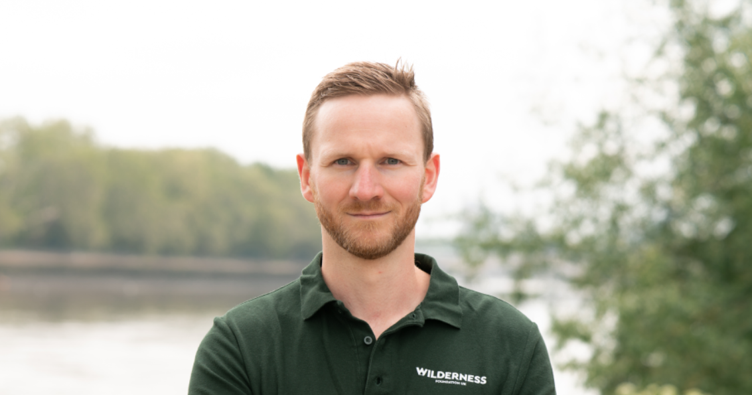
Mark is a record-breaking adventure and exploration speaker, European Adventurer of the Year and Fellow of the Royal Geographical Society. In 2023, he became part of the first team to kayak the entire Northwest Passage using human power, securing two world-first records. His earlier failed attempts to row the Atlantic also led to a serious mental health crisis that changed how he understood resilience, motivation and success. Champions Speakers
In this exclusive interview, Mark explains how his four-question Find Your Polar Bear framework helps people reframe uncertainty. He also discusses building camaraderie around a shared purpose and developing mental fitness without pushing people from challenge into anxiety.
Training Journal: When teams face uncertainty, how can leaders help them move towards the challenge without becoming fixated on the outcome?
Mark Agnew: Reframing. I’ve tried to make it as simple as possible. I ask myself four questions. When I’m faced with uncertainty or a challenge, I say:
- Is it a challenge?
- Is it a chance to build camaraderie?
- Is it a unique experience?
- Or, is it a chance to be of service to others?
Once you can answer one or more of those questions, it ceases to become about the outcome. The difficulty is no longer an obstacle between you and your outcome. It becomes about something that’s internal and personal to you.
In the Northwest Passage, there was one day when we were excited about a big 40-mile day. We circled a place on the map. We were going to crush the distance, set up camp and celebrate. We got on the water, and the conditions were different to what we expected. There were lumpy waves coming in from all directions, and we were barely moving at two miles an hour. The 40-mile day was clearly off the cards.
Under my old mindset, I would have been deflated. This headwind was an obstacle between me and the 40-mile day that I wanted. Instead, I asked myself the four questions.
- Is it a challenge?
Yes, it’s a chance to challenge myself and push myself even harder in these difficult conditions. - Is it a chance to build camaraderie?
Yes, camaraderie is formed when tough times are shared, and today was going to be really tough. I wasn’t pushing to get 40 miles. I was pushing for other people. That gave me a sense of meaning. - Is it a chance for a unique experience?
Yes, I was totally immersed in nature. The waves were breaking over the bow. I was getting spray in my face, spitting salt water out and then getting back to it. What a unique, incredible experience. - Is it in service of others?
I was raising money for charity. It was more important than a 40-mile day. I was doing something that could affect real lives.
Suddenly, the headwind ceased to become an obstacle between me and the goal and started to become something that was facilitating the challenge, the experience and the camaraderie. It became meaningful and enjoyable. I thought: “This is what I’m here for. I’m not here to go 40 miles. I’m here for a challenge, an experience and camaraderie.” I started to enjoy myself.
We went 23 or 24 miles, rather than 20 or 19. Although it wasn’t 40, it was more miles than we would have managed in those difficult conditions had I been deflated. The simple thing I always come back to is that if you’re enjoying the challenge and it’s something meaningful to you, you will outperform everybody else who only sees adversity as an obstacle or something to endure.
If it’s something to enjoy instead of endure, your performance will go through the roof. You’ll exhibit resilient traits as a byproduct of having fun.
TJ: When priorities and measures of success change quickly, how can leaders keep teams aligned around a shared purpose?
Mark: When I was first trying to row across the Atlantic, my goal was to set a world record. When I went to the Northwest Passage, my goal was to build camaraderie. In the Atlantic, if I didn’t set a world record or cross, it was a failure. The failure was utterly binary: either get to the other side or not.
In the Northwest Passage, if I finished 100 miles short or 1,000 miles short, something went wrong, or we ran out of time or food, I could still say to myself: I had the experience of camaraderie that I wanted. I would deem it a success.
That really is the idea that it’s a journey, not the destination. I was trying to find a way that meant I could deem the journey a success irrespective of the destination.
In your company, if you make camaraderie the goal, you say every day: “I’m here to build camaraderie. I’m not here to make sales or grow by X%. I’m here to build camaraderie.” You might fall short of sales every now and then, but you might fall short even if sales is your goal. If camaraderie is your goal and you feel like you’re genuinely working towards that, the outcomes become a byproduct of that camaraderie.
In the Northwest Passage, I was digging deep for others. I was trying to make food for people. I was trying to be grateful when they were doing the same for me. We were looking after each other and trying to build those bonds through shared effort.
As an inevitable byproduct of that, we kept moving forward in a way that we perhaps wouldn’t have if I had only thought: “We’ve got to move quicker. Why aren’t we getting to the end?” If you make camaraderie the goal, everything else follows.
TJ: From an L&D perspective, how can organisations build mental fitness progressively without pushing people from challenge into anxiety?
Mark: There are a couple of metaphors here. Firstly, you can see the brain as like a muscle. You build it up. If you want to build a muscle, you have to do it incrementally. If your goal is to deadlift 200kg and you tried to lift that immediately, you’d probably break your back or, in the best-case scenario, you wouldn’t move the bar. You start at 50kg, go to 55, then 60 and 70, and in two years’ time you can lift 200. Part of it is knowing that it’s incremental.
Another framework I read in a book called Flow, which is about the psychology of happiness, is the three levels: comfort, challenge and anxiety. If you’re in the comfort zone, you’re bored. You’re not growing. If you’re in the challenge zone, that’s the one that’s exciting, meaningful and growing. If you go too far too quickly, you’re in anxiety. You’re not enjoying yourself, growing or learning.
What I think is different about my Find Your Polar Bear framework is the study of intrinsic motivations. What gets people to want to challenge themselves? Two of the things are what you’re already good at and what you already enjoy. You’re going to want to push yourself more.
When I say go into the challenge zone, if you start with a small weight, you then build up. If you’re struggling with something, don’t go too big too quickly. Find something you’re good at and go big from there.
I love public speaking, and I’m terrible at accounting. Instead of saying, “Let’s start with some basic accounting and try to improve because I’m running my own business and need to learn about accounting,” I say, “Let’s focus on public speaking, challenge myself to become world-class at it and find somebody else to do the accounting.”
If you want a high-performing team, understand what individuals enjoy and what they’re already good at. Then find a way to take that to the next level rather than trying to fill the gaps in the things they’re not already good at. They won’t enjoy it as much or challenge themselves as much. Even if they do, you’ll end up with them being quite good at many things rather than world-class high performers at some things.
That’s the nature of a team, you’ll have somebody who’s good at public speaking and somebody who’s good at accounting. There you go. You’ve got the whole team you need, or you can outsource it.
It’s about incremental challenges. Don’t move into the anxiety zone too quickly. Step out of the comfort zone, find something people enjoy and are already good at, and go from there.
TJ: What practical framework do you want leaders and learning professionals to remember after hearing you speak?
Mark: The first thing I want audiences to take away is to enjoy themselves. These are stories I love to tell about polar bears, sea ice, and ice coming together and slamming our kayaks. We thought we were going to be crushed to death, but at the last minute, the pressure pinched the bottom of the kayak and lifted us into the air. There are beautiful, wonderful experiences, such as being surrounded by narwhals and seeing the Arctic winter closing in on us. I hope people enjoy the stories.
Secondly, I want them to understand that resilience isn’t one thing. It is many things, and there are different tools for different circumstances, from adapting to imagination. Imagination is a huge part of it. It sounds like a soft skill, but how can you adapt to a different outcome if you can’t imagine one first?
The secret is asking yourself those questions about whether something is a challenge, an experience, a chance to build camaraderie or to be of service to others? I try to make it as simple as possible so that, in a year or 10 years, people can ask themselves those four questions.
It isn’t laden with difficult-to-apply, unactionable, in-depth psychology. The psychology is there. I’ve done years of research, interviewed dozens of psychologists and applied it in the Arctic. But I’ve made it as simple as possible.
When you’re in a critical situation, you don’t have time to go through a checklist, get out a notebook and remind yourself. I needed something I could apply in a second when I was becoming overwhelmed and the stakes were literally life and death.
This is the framework I developed: Find Your Polar Bear. Is it a challenge? Is it an experience? Is it camaraderie? Or is it a chance to be of service to others?
This exclusive interview with Mark Agnew was conducted by Tabish Ali of the Mental Health Speakers Agency
If this article piqued your interest, you’ll probably find value in our conference!
Find out about keynote speaker Erica Farmer, her opening session on the
AI Fire Hydrant and what it means for productivity, performance and L&D
Don’t miss 50% off your ticket for the first 30 only!
