Middle managers hold organisations together by translating strategy into everyday decisions, absorbing emotional tension and making meaning when work is messy. These capabilities are too often mislabelled as “soft skills”, leading to underinvestment and burnout. Gary Cookson argues that they are smarter skills and they drive performance, trust and coherence.
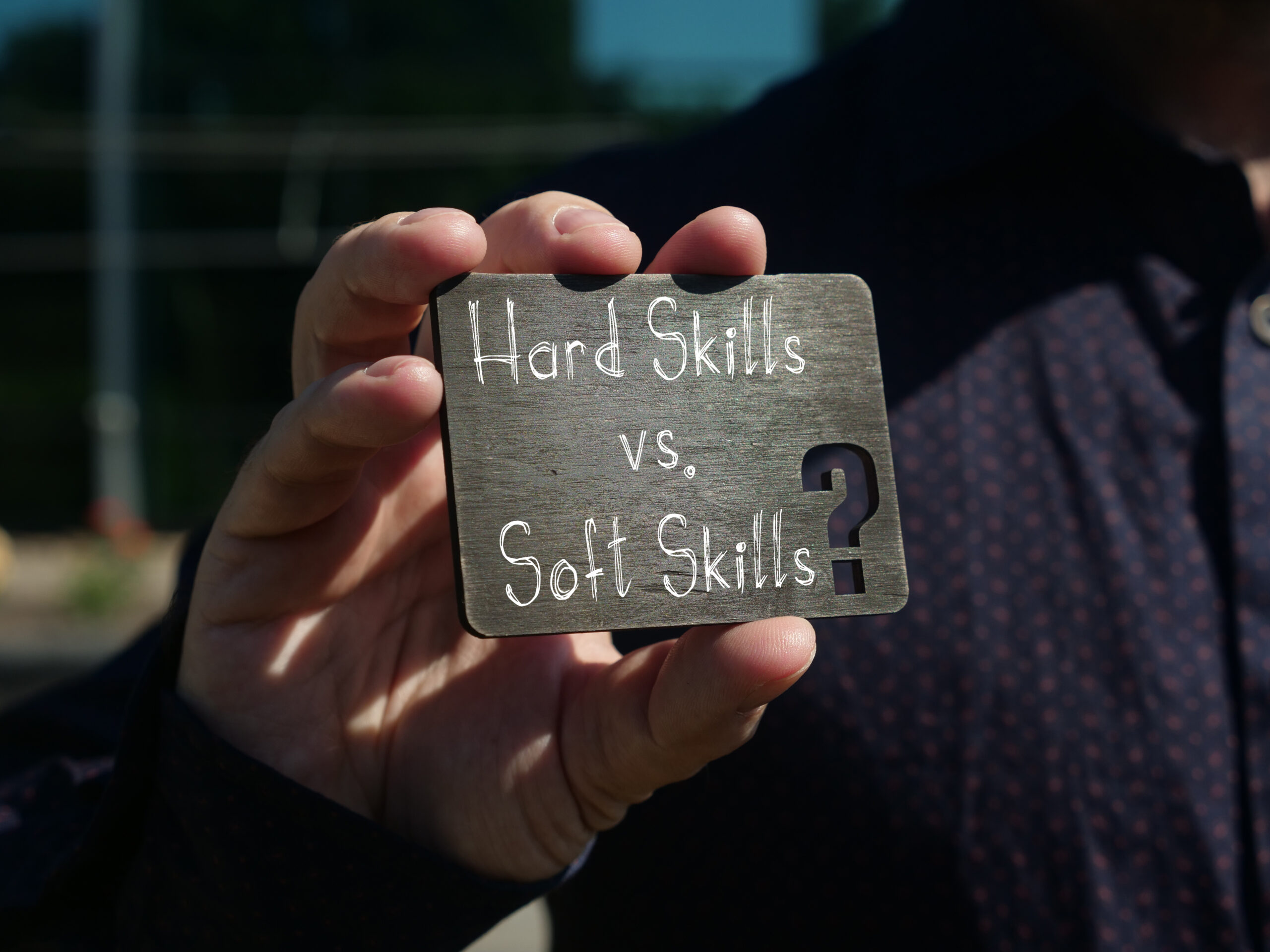
Emotional intelligence, sense-making and the human work that keeps organisations moving. We need to stop calling them “soft skills.” That’s a misleading label. If emotional intelligence, judgement, communication and adaptability are soft, then what exactly is hard?
The modern workplace can be messy and sometimes chaotic
Organisations don’t struggle because they lack systems. They struggle because they lack the human capability to make sense of them. The modern workplace can be messy and sometimes chaotic. It is often politically charged, emotionally complex and structurally ambiguous. And that complexity lands heaviest in the middle of organisations, where managers reside.
Where complexity lives
Middle managers sit at the fault line between strategy and execution. They don’t write the strategy. They aren’t on the frontline delivering services. They translate one into the other, and therein lies risk, ambiguity and emotional labour.
Research repeatedly shows they are under intense strain, with many middle managers reporting feeling overwhelmed or burnt out. Large proportions spend perhaps half or more of their time on non-managerial work. Yet they remain the easiest layer to cut when budgets tighten. That might be the wrong thing to do, and it suggests such organisations not fully understanding the value middle managers create.
In one retail organisation I spoke to when researching my book The Squeezed Middle, attrition at middle manager level was significantly higher than at any other tier. This was mostly because managers were promoted for technical competence and given process training but not prepared for the relational and political reality of the role. They were expected to manage upwards and downwards simultaneously, coach large teams, handle conflict and interpret shifting strategic priorities, but given no preparation.
The organisation eventually created a six-month assessed development pathway before promotion into middle management. After that, attrition fell and performance stabilised. This didn’t involve building or adapting any systems but did involve a focus on building human capability.
That isn’t soft work at all. That’s hard.
Translation = leadership work
Only a minority of managers in my research reported feeling highly confident in communicating organisational strategy to their teams. That is not a communications problem, it’s a capability problem. Translating strategy is not about repeating executive language, but about making meaning, and answering questions like:
- What does this actually mean for us?
- What changes? What does not change?
- What matters most?
- What do we stop doing?
When strategic goals collide, someone must arbitrate. When a return-to-office mandate meets team resistance, someone must absorb the emotional tension. When a focus on using AI more meets fears about job losses, someone must reconcile that. When executives are disconnected from operational reality, someone has to bridge the gap. That someone is usually a middle manager.
In another organisation I spoke to, middle managers were filtering information from above to “protect” their teams during a period of change, but that led to confusion and mistrust. A development programme reframed their role: not to shield teams from information, but to pass it on and help interpret it. Transparency and trust both improved. Sense-making is not administration, but human judgement in action.
Emotional intelligence as competitive advantage
Emotional intelligence is often trivialised as being “good with people.” I believe it is the ability to regulate yourself while influencing others under pressure. Middle managers must implement decisions they may personally disagree with. They must mediate conflict between teams. They must maintain morale during redundancy programmes. They must challenge upwards without damaging credibility.
I recall once when I was a middle manager, and during a deeply personal crisis, my Chief Executive offered me three options: take time off, throw myself into work, or stay and be imperfect for a while. I chose the latter. That moment of empathy has shaped my own leadership philosophy for decades since. Culture is not built in strategy documents, but in moments like that.
When emotional intelligence is absent, organisations see increased conflict, disengagement and burnout. When it is present, performance improves because people are treated as human beings. Calling this soft diminishes its strategic importance.
The administrative illusion
There is a popular narrative that middle managers create bureaucracy. The reality is more uncomfortable: they are often where bureaucracy accumulates. Studies cited in The Squeezed Middle suggest managers spend significant portions of their time on reporting, meetings and administrative tasks. But whilst workplace relationships account for a substantial proportion of job satisfaction, managers devote far less time to relationship-building than to process compliance.
If we want stronger leadership, we must create space for it.
In one voluntary-sector organisation I spoke to, middle managers had no clear role definition. Everything not owned by executives or frontline managers defaulted to them. Development focused elsewhere, and isolation grew until a structured programme changed that. Clear collective responsibilities were defined. A dedicated forum for middle managers was created. Peer networks formed. Development was externally accredited. Engagement rose. For eight years, no middle manager chose to leave.
The lesson is not that accreditation is magical. It is that clarity, community and capability matter.
Hybrid work exposes weak leadership
Hybrid working has intensified complexity. Collaboration must be intentional. Inclusion cannot rely on geographical proximity. Accountability must shift from presenteeism to outcomes.
Middle managers are expected to make this work. They must decide when synchronous meetings are necessary and when asynchronous tools suffice. They must ensure remote colleagues are not excluded from informal influence networks. They must manage productivity without resorting to surveillance.
Technology can support this but cannot lead it. The managers who succeed in hybrid environments are those who demonstrate judgement, trust-building and adaptability. They understand that flexibility is not a perk but a structural shift requiring behavioural change.
Again, these are not soft skills. They are smarter skills.
Development that mirrors reality
Too often, leadership development focuses on models rather than lived complexity. Middle managers need opportunities to practise influence without authority, handle real business projects, receive 360-degree feedback and build cross-functional relationships. They need structured reflection, coaching and peer challenge.
They also need recognition that middle management is not merely a stepping stone. It is a destination role requiring distinct capability. When organisations invest intentionally in that capability, the financial returns could be significant. More importantly, cultural coherence improves, strategy implementation becomes smoother, and engagement strengthens.
The middle stops being squeezed and starts being strategic, magnificent.
The AI moment
Artificial intelligence will automate tasks. It will draft reports and summarise data. It may even suggest decisions. But it will not rebuild trust after a restructuring. It will not sense unspoken resistance in a team meeting. It will not decide when to challenge a senior leader on behalf of a team.
As automation increases, the relative value of human judgement increases. Adaptability, emotional intelligence, continuous learning and resilience are becoming core leadership capabilities. They are not peripheral competencies to be added at the end of a programme. They are central to organisational performance.
From soft, to smart
If L&D continues to categorise emotional intelligence and sense-making as soft, organisations will continue to underinvest in them. These skills determine whether strategy translates into action, whether change embeds, whether culture aligns and whether people remain engaged.
In a messy world, smarter skills are not optional. They are what keep organisations moving.
Gary Cookson is Director of EPIC HR and author of HR for Hybrid Working, Making Hybrid Working Work and The Squeezed Middle
