
L&D can’t make impact visible an important from the side-lines. The TJ Readiness Enablers Index shows that the biggest bottleneck to meaningful change is access to decision-makers about strategy, budget and priorities. While L&D has momentum, readiness is inconsistent, and influence depends on being close enough to shape action early.
In a context of L&D focusing on impact, including grappling with how to measure it, how to evidence it, how to report it and how to make it visible to the business, we need to hone in on one area: do L&D teams have the conditions they need to turn that evidence into action for the whole organisation?
The findings show a profession with momentum, but not yet consistent readiness
That is what the TJ Readiness Enablers Index sets out to explore. Published as part of The TJ L&D Influence Report 2026, the index looks at four practical enablers that shape whether L&D can move from insight to progress:
- Access to decision-makers about strategy, budget and priorities
- Access to usable data
- Time and permission to experiment
- The tools, processes and support to implement and scale what is learned
The findings show a profession with momentum, but not yet consistent readiness.
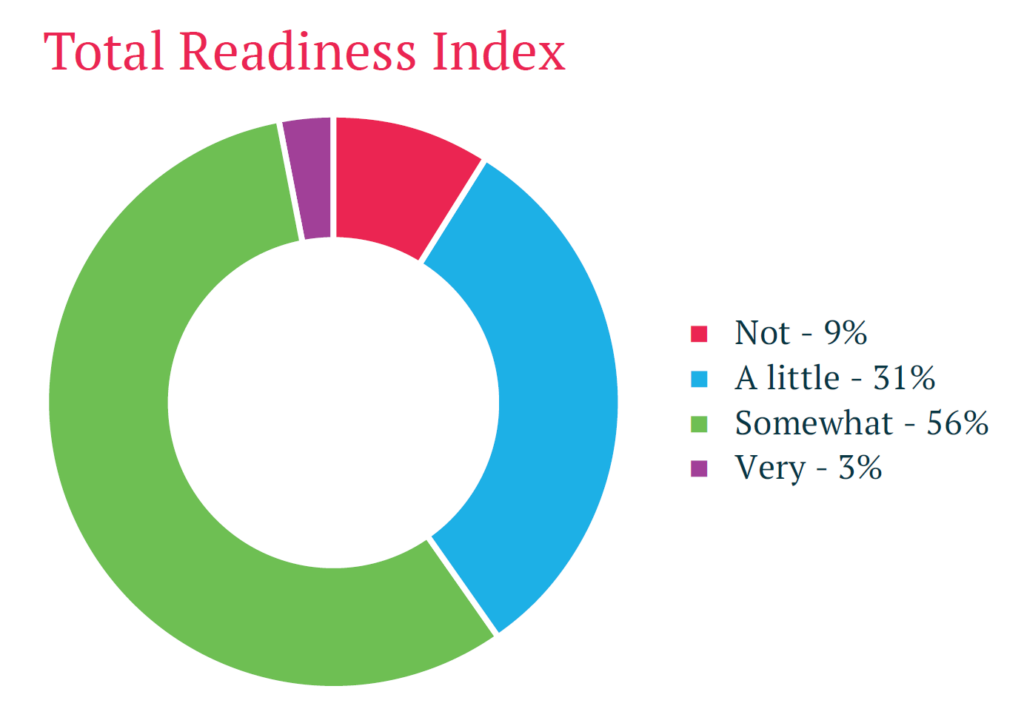
Across the sample, 56% of respondents were “somewhat” ready to turn evidence into action, while 31% were only “a little” ready and 9% were “not” ready.
Only 3%, just one person, said they were “very” ready.
The findings show a profession with momentum, but not yet consistent readiness. Across the sample, 56% of respondents were “somewhat” ready to turn evidence into action, while 31% were only “a little” ready and 9% were “not” ready. Only 3%, just one person, said they were “very” ready.
The sample size is small, so these findings should be treated as an early signal rather than a definitive sector-wide benchmark. However, the pattern is useful because it gives L&D a sharper question to ask. Where does evidence-to-action break down?
Business bottlenecks
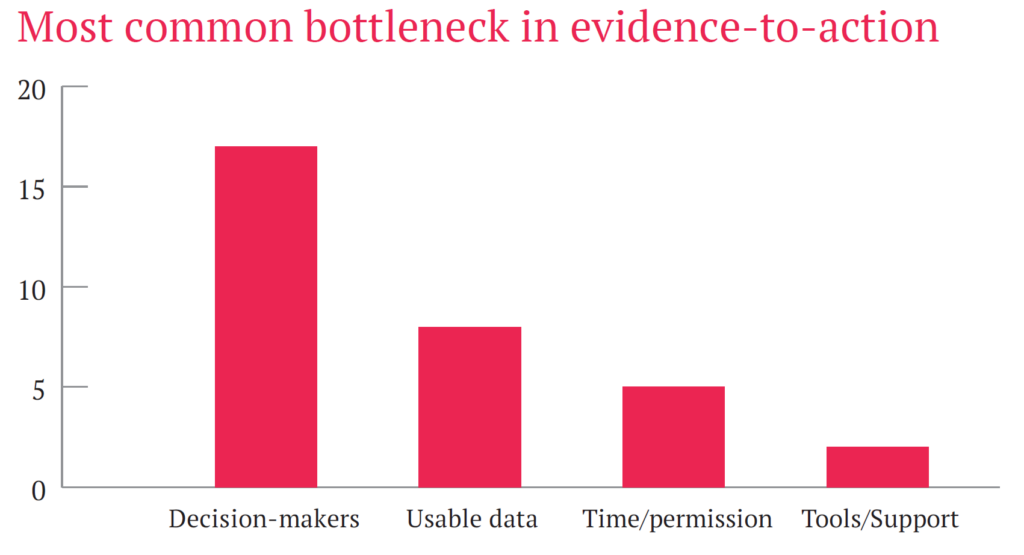
The answer is revealing. The most common bottleneck was not tools or processes. It was access to decision-makers about strategy, budget and priorities. Impact is rarely created by L&D in isolation. If learning teams are brought in late, kept at arm’s length from strategy, or asked to respond to pre-defined solutions, their ability to influence outcomes is already constrained. They may still create good learning experiences, but they are less able to shape the conditions that make performance change possible.
The report expands this point through suggesting enablers. The practitioner quotes are direct: “Involve us at the beginning of any conversation about change, projects, new roles etc.” Another calls for L&D to “get attention at the top”. This is not about status for its own sake. It is about being close enough to the work to understand what the organisation is trying to achieve, what is getting in the way and what evidence will count as progress.
Connected influence
The index also shows why access is connected to the other enablers. When L&D has better proximity to outcome owners, success measures become clearer, data becomes easier to interpret, and experiments are easier to run in real workflows. Evidence travels further when it is built with the business, not presented to the business after the fact.
The implication for L&D is practical. Improving impact is not only a measurement challenge. It is a relationship, access and influence challenge. Teams need to ask where they are currently involved, who owns the outcomes they are supporting, and whether they have enough access to shape decisions before a solution has already been chosen.
TJ will continue to build the Readiness Enablers Index through current research, increasing the sample size over time and tracking how readiness develops across the profession. L&D professionals can contribute by completing the short survey, using the questions as a reflection tool for their own team or organisation, and adding to a wider picture of what helps L&D turn evidence into action.
The current signal is clear: if L&D wants to make impact legible, it needs timely access to the people, priorities and decisions that shape whether impact is possible in the first place.
