
Organisations often respond to mounting pressure by adding more activity, yet execution suffers when people are overwhelmed. Dr Ravinder Tulsiani argues that effective change depends on precision, consistency and reinforcing a small number of critical behaviours in real work, helping leaders turn urgency into sustainable performance rather than organisational noise.
AI is making many CEOs feel that slow adaptation is no longer a strategic inconvenience: It’s a survival risk. Move fast or fall behind. Therefore, responses become predictable. More investment, transformation, technology, change… all delivered faster. That pressure doesn’t stay at the top.
The problem isn’t change; it’s how change is landing
It moves through the organisation and shows up as overload, fragmentation and people trying to keep up while the ground keeps shifting. This is where most organisations misread the situation. The problem isn’t change; it’s how change is landing.
Intensity is a natural response to pressure. It’s also the wrong one
When stakes rise, organisations often increase the intensity, with more tools rolled out at once, more behaviors expected immediately and more process changes with less time to absorb them. From the perspective of decision makers at the top, if feels decisive.
For everyone else, it feels very different in execution. As intensity rises, so does cognitive load, re-working and errors. And decision quality drops. The cost of mistakes, especially in complex environments, gets expensive, fast. Change doesn’t fail in strategy decks, it fails in the next decision someone makes under pressure.
Imagine trying to climb a 30-foot wall
You can jump harder, or train more, or push yourself to the limit. But no amount of intensity will get you over it. At some point, the problem isn’t effort. We have to change the approach. If the objective doesn’t change, you still need to get over the wall, then the method needs to.
So, you stop focusing on jumping and instead start building a ladder. That’s the shift most organisations miss. Under pressure, they increase effort, when what’s required is a more precise way to get there.
Behaviour doesn’t change at the initiative level
Organisations manage change at the macro level, with programs, roadmaps and platforms. The trouble is, that people experience change in moments. Such as a manager opening a difficult conversation, a team deciding whether to clarify or assume, or an employee defaulting to the old process because it feels faster. If those moments don’t change, the transformation doesn’t either.
The shift is from intensity to precision
The answer is not less urgency, it’s better-directed urgency. Precision means being specific about what must change now. It’s not everything, instead it’s focusing on the few behaviours that actually move performance.
In your next meeting, state the decision required in one sentence. In your next one to one, ask one question before advising. Be small, specific and actionable.
Then it’s about consistency as precision sets the change and consistency makes it stick.
Consistency means that the behaviour is repeated in real work, deviations are noticed early, corrections are immediate and reinforcement are on-going.
We don’t always need more training, just better follow-through. Once that repetition starts, something shifts as it stops feeling like change and starts feeling like how work gets done.
Where most strategies break
When making change and scaling it, it’s often through will of force. Putting out more content, even more communications and creating more pressure. But all this wasted effort just creates noise, and that intensity overwhelms people.
This is where L&D becomes critical yet often falls short. In high-pressure environments, L&D is expected to keep up with change, so it does what it has always done, develop the content, programmes and roll them out. The modern role of L&D is not to deliver more learning, but to control how change lands in real work.
That means:
- Identifying the few behaviours that matter most right now
- Anchoring them to real decision points
- Supporting people in those moments
- Reinforcing consistently until the behaviour holds
What this means for leaders
In high-pressure environments, the advantage doesn’t go to the organisation that pushes hardest, it goes to the one that can answer:
- What must change this week?
- Where will it show up?
- What does better look like?
- How will we reinforce it consistently?
That’s how you control the flow, order, and magnitude of change—without overwhelming the system. The pressure to move faster is real and ignoring it isn’t an option. Meeting that pressure with intensity alone is what breaks execution.
Instead, precision directs change, consistency embeds it. Most organisations never get to that level, the ones that do don’t just move faster… they adapt in a way that actually holds.
Dr. Ravinder Tulsiani is Principal, Interim Enterprise Capability & L&D Advisor at Catalyst Learning
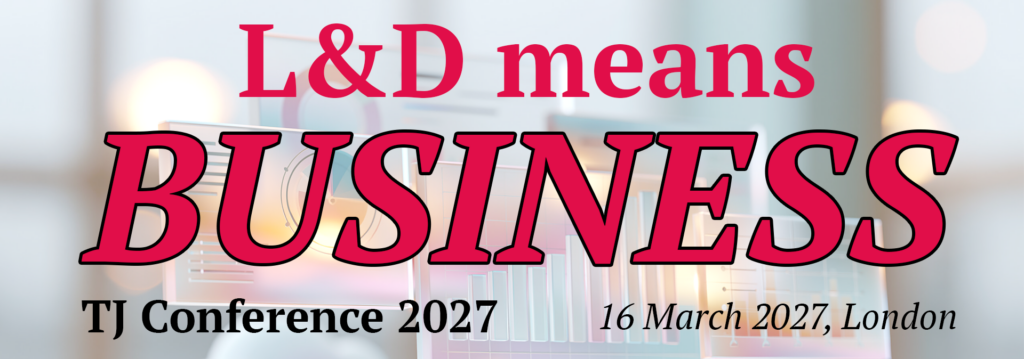
If this article piqued your interest, you’ll probably find value in our conference!
Find out about keynote speaker Erica Farmer, her opening session on the
AI Fire Hydrant and what it means for productivity, performance and L&D
Don’t miss 50% off your ticket for the first 30 only!
