
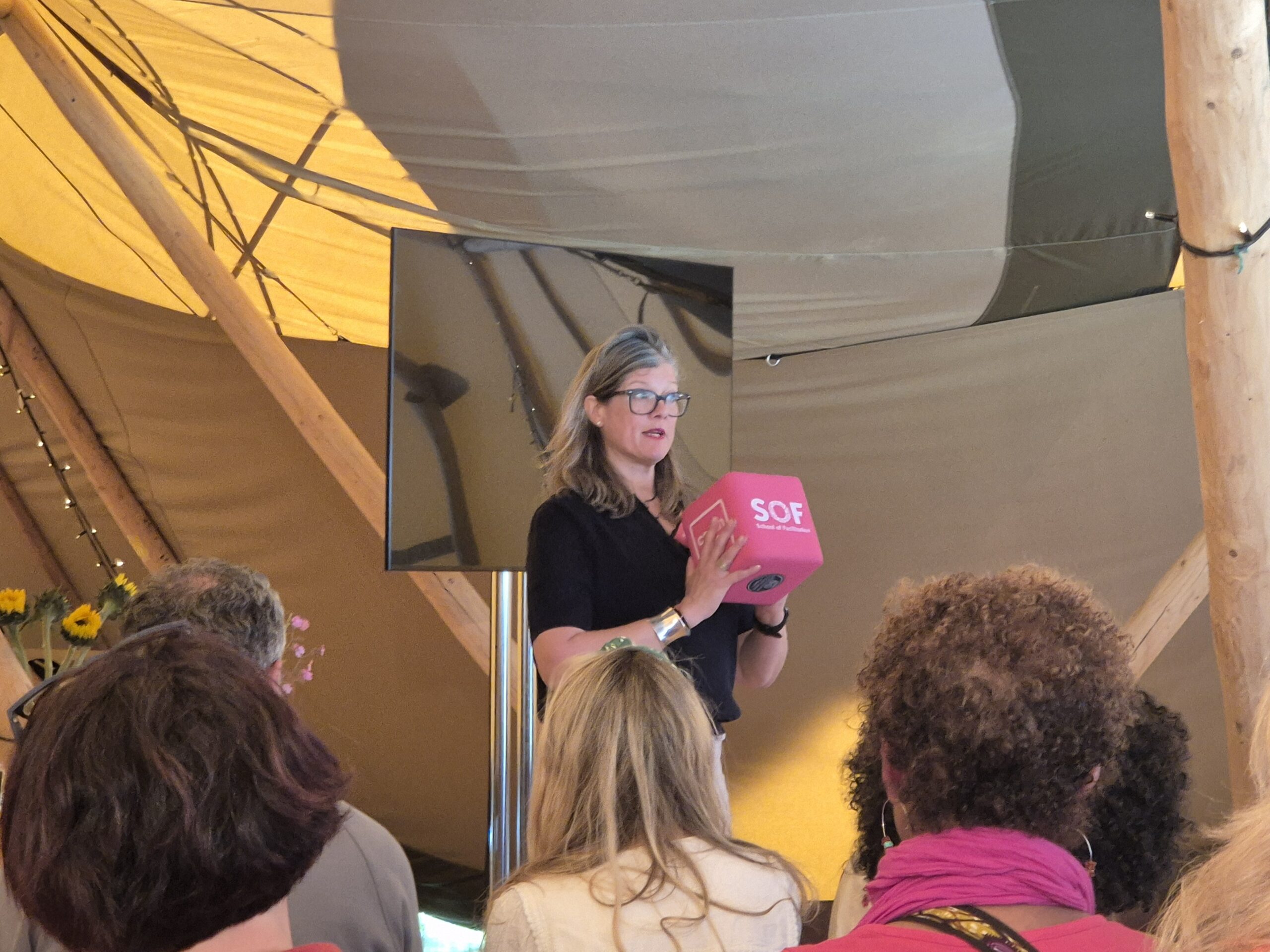
Kirsty Lewis outlines how SoFest is coming together, with its mix of workshops, shared experiences and outdoor setting. With thoughtful attention to accessibility, wellbeing and community, the event aims to create rich opportunities for learning, conversation and connection, while Impact Tickets help widen access and support new voices in facilitation.
In summary
- SoFest 2026 is designed as an immersive outdoor learning experience rather than a traditional conference
- The event combines short talks, workshops, communal meals and informal evening connection in a nature-based setting
- The venue offers a contained, walkable site with strong green credentials and practical accessibility support
- SoFest’s Impact Tickets help widen access for people who may not otherwise be able to attend
- The event aims to balance depth, playfulness and community in a way that feels different from conventional professional gatherings
SOFest 2026 puts connection, accessibility and community at the heart of learning
For people who want something different from the usual conference format, SoFest 2026 is positioning itself as a more immersive and human-centred experience. Speaking with Training Journal, SOFest founder Kirsty Lewis described the event less as a conference and more as a large-scale workshop in a field, where learning, conversation and community sit side by side.
Set outdoors in Essex, SoFest combines a main teepee stage, smaller workshop tents, shared meals and evening activities, creating space for both structured learning and informal connection. The design is intentional: sessions are short, breaks are longer, and the environment encourages people to think, talk and reflect without the usual rush of a packed conference timetable.
Accessibility and care are also central to the experience. Kirsty highlighted practical support around mobility, hearing loops, dietary requirements and allergy needs, alongside a setting that is walkable, contained and designed to help people feel comfortable and included.
A key part of SoFest’s wider mission is its Impact Tickets initiative. These tickets are funded through sponsorship and part-sponsorship, helping people from underrepresented backgrounds, people with disabilities and newer facilitators access the event. Sponsors can also choose to mentor recipients, adding a longer-term development opportunity alongside attendance itself.
As Kirsty explained, the goal is not only to create a memorable event but to make space for new voices, fresh perspectives and meaningful professional growth.
Video transcript
Transcript from TechSmith Audiate:
Jo Cook: Kirsty, how is planning for SoFest twenty twenty six going?
Kirsty Lewis: Good. It’s March. We have…we’re we’re in a really good shape. So, obviously, by now, venue is totally booked. Deposits are all paid. Right. We have eighty people…bought tickets, signed up, coming, which is incredible for March. Um, the speaker lineup is confirmed. Workshop hosts of which there are sixteen, all confirmed.
We’re now into the sort of…detail and the the touches. So there’s behind the scenes, uh, there’s an we’ve got an amazing project manager called Toni, and she is designing welcome packs and information and getting people to say where who they want to share a tent with, uh, all the way down to food allergies, to accessibility needs. Um, and then come April and May, we have the welcome gatherings and lots of detail goes out about how to get there and what to expect. So it’s it’s in really good shape. Lovely.
Jo: So that’s a really good point about what to expect. So if somebody’s been living under a rock, hasn’t heard all of the good stuff about SoFest from last year Mhmm. I call it a conference in a field, which I feel is a really good shorthand. But you’re, like, rolling your eyes because you don’t like the word conference in this Yeah. Application.
Kirsty: Because I see SoFest as the kind of… enormous workshop that all of us would absolutely love to be part of. And what I mean by that is…you’re with people you want to be with and you’ve chosen to be with. You know every single conversation has possibility to take you on a path that you just don’t know where it’s gonna go or it’s gonna be rich and diverse. You’re with like minded souls. You’re outdoors and in nature.
And what we mean by that is we have a massive, massive teepee that’s t shaped that is like our central point. We call it the main stage where all the speakers and the gatherings happen. And then we have three other tents where the workshop zones are so people can then, uh, we go off into smaller groups. We sort of play by our rules of, like, we would all want to have a great workshop design. So what I mean by that is the breaks are thirty minutes. You’re not trying to cram everybody through the loos and to get a drink and a snack in ten minutes. Um, there’s fresh air. There’s plenty of daylight. Um, you’re also with what’s different is you’re with people…for the evening as well. So you’re having, um, dinner together. We have big communal meal.
There’s the opportunity to sit outside around the campfire and sing or go and do the quiz, um, or just hang out and just, like, go quiet wherever you need. So it isn’t four walls, dark room, sit to listen to the sage on the stage for, like, thirty, forty minutes. Like, let’s just be clear. The speakers have twenty minutes. Twenty minutes.
Jo: A short amount of time. I complain about that in other places.
Kirsty: No. I think it’s good. It keep because it’s really high touch. Everybody gets to talk to each other. So that’s the other thing. Like, the speakers in the workshop posts…are from people who’ve bought tickets. So I think that’s really important because they want to be there. So they’re not just wolfing in to do their slot and then leaving again. Like, they’re there to do their own learning development connection. So it creates a very different vibe. Mhmm.
Jo: Okay. So maybe I should start calling it a workshop in a field.
Kirsty: Yeah. God imagine that. That’s a big workshop. I like it. is.
Jo: And I’d love to know a little bit more from you about the the in a field, the in nature, and the reactions you’ve had from people from last year about it.
Kirsty: Uh, well, it’s only been positive. Oh, the one the one bit of feedback was… some people said they’re hay fever. And I said, I can’t control the hay fever or the the pollen that floats around. I think people were like, okay. We really get that there is it’s beneficial to be in nature. And because they’d never been to something like this before…and or the space that we were using, many people said we just couldn’t even envisage what to expect.
And I think people are a bit apprehensive that it was gonna be, like, uneven ground. It’s gonna be really muddy and boggy or, like, it’s a big space that they had to traverse. And so when they arrived and they see…Chalkney Meadows, where we have SoFest, and it’s beautifully contained. And what I mean by that, it’s… you can walk end to end. So end to end would be from where the glamping pods are to the far side of the open field. It would take you maybe six, seven minutes. And, also, everything is quite flat and even. Uh, beautifully lit. Lots of fairy lights. Very twinkly. It’s, um, a solar it’s it’s it’s eco. It’s a green site as well, so it’s they generate all their own power, which we think is fantastic. So…
Jo: Yeah, it’s it’s a nice space. Yeah. It hits all those kind of, a, the green credentials. It hits all the, like, the mental health and well-being credentials. And, also, it kind of works, I think for the most part for accessibility. So I’ve got some accessibility needs myself. I’m not in a wheelchair. Uh, but my mobility is definitely an issue.
And that was something I was worried about because I don’t do festivals. I like nature and outdoors. I’m a gardener, but I don’t go and sit in a field. But, actually, having been there, I was absolutely fine and loved it and enjoyed it and can’t wait to go back again.
Kirsty: Oh, uh, and some other things as well, like, the site is brilliant. They can do hearing loops. They’re very clear about that. If people need to drive physically right up to the door of the the main tent, that is totally possible. You saw it.
Jo: I did it myself more or less. Yeah…
Kirsty: And, yeah, it’s it’s wheelchair friendly for for sure. So, yeah, everything is possible. And then just on that on, um, accessibility, from a dietary perspective Mhmm. Uh, we got some really great feedback…from people who had who were celiac or vegan or, like, high allergy. Mhmm. They said…we had they were like, we felt really safe because we felt very cared for. Yeah. And it was very evident that the caterers, like, took time and effort to understand my needs Yeah. And therefore created food that I could actually eat. And there was enough of it as well. So that was that was music to my ears.
Jo: And I’m special in that way too. Uh, and so I was one of your gluten free’s. And, yeah, often you get, like, the horrible version or everybody gets a fantastic cake and I get poached pears, uh, which I I’m sick of. Um, so it’s really nice that you had, uh, an equal kind of value equal product, I think, was really good. You didn’t get the rubbish version. It wasn’t the afterthought. So that was really important.
Kirsty: I just, um, something I was thinking about there, Jo, you said, you know, I don’t do festivals. The only reason I call it a festival is it just sounds good so fast. Yeah. The if anyone’s sitting there thinking, I don’t do festivals, it’s it is just a massive workshop in the field. Yeah. Think of it like that.
Jo: I think it’s got that it’s got the it’s got the vibe of the festival without with the mud. It’s not Glastonbury where you’re dragging your beer through the mud and you don’t sleep for three days and the portaloos are horrible, but it’s got the festival vibe in the sense that it’s welcoming and people are lovely and it’s in the summer and it’s outdoors.
Kirty: Yeah.
Jo: And it’s a really pleasant, playful experience even though some of the topics…can be quite deep. Um, whether that’s technically or cognitively deep or emotionally deep. And we’ll we’ll get on to the sessions a bit more into in another video. But I think it’s the vibe that I think is is festival like. And I I like the vibe bit.
There’s something you have called an impact ticket. So, you know, I can go and buy my ticket quite easily. That’s great. But what if, uh, I can’t go? What if I don’t want to go? What if, uh, I’m an organization? I’d like to support you and someone, but, actually, I I don’t wanna necessarily buy a whole ticket or something. How does that work?
Kirsty: So one of the things that was really important to us from the beginning and and when I say we, there’s a small team at SoF, and then there’s trusted advisers and just a community of, um, um, people who attend lots of school facilitation events. And we wanted to make it an an accessible event to those who maybe find that it’s more the financials were unable to afford to come because the tickets we recognise… are more than your average conference because of the glamping, because of the food.
Jo: But, actually, I don’t think they’re even more than an average conference, but they do include all of your accommodation and your food. So, actually, I think they’re better value for money in some senses than another conference.
Kirsty: But but they’re not it’s not a cheap ticket. No. It’s a four figure ticket. It’s sixteen hundred pounds. So we wanted to be able to make… the SOFest available to other people. So we then created something called an impact ticket. So an impact ticket is positioned to those who are and this is… global south, the majority from the global south, LGBTQ plus, people with accessibility…uh, unseen disabilities. I also wanted to support, uh, the new upcoming facilitators and trainers under thirty. So we’ve created these impact tickets, and we’re saying we’re we are seeking people to or organizations to sponsor a ticket and therefore be able to give someone another person the opportunity to come to SoFest and and get all the best bits that they can out of it and develop and grow and continue to grow themselves. We also if you if your organisation does sponsor an impact ticket, we then say, do you want to mentor the person…that, um, is a receiver of your ticket? That’s not a a must condition, but it’s an invitation again.
Um, we also have made it possible this year that if people want to, like, part part contribute or part sponsor a ticket. So the lowest amount we’ve said is thirty three pounds plus VAT. It’s just a figure we came up with. And then we’ve got people who’ve bought half a ticket, for example. So right now, we have got two and a half impact tickets.
Jo: Amazing. So I can only chuck thirty quid in a bucket to make the ticket.
Kirsty: Exactly that. Nice. And I would love I mean, last year, we had seven impact tickets… We’re nowhere near that right now. So if anyone’s listening to this thinking, oh, I do wanna get involved, uh, you would be so, so welcome. For the business minded amongst you going, is this tax deductible? Your accountant will tell you it’s not. So this is down to philanthropic…good heart, goodwill, and the possibility of picking up a mentee and someone you might then work in your business because you do find talent.
Louise: So why am I at SoFest? Well, um, I’m actually lucky enough to have an impact ticket. So a good friend of mine, Victor, who is speaking, um, tomorrow, actually, he put out on his LinkedIn that, um, Kirsty was just basically giving away free tickets to young people who are in facilitation or coaches, and they they want to develop in their skills and their career. And, of course, me being on LinkedIn twenty four seven, I saw it, and I was like, yes. How do I apply for this?
Jo: Tell us about Louise.
Kirsty: So what I absolutely love is last this time last year, I didn’t know who Louise was. And she applied for an impact ticket as you heard in the video. And she came along, and she’s like this pocket rocket of enthusiasm. She got involved straight away. She made herself known to me and the team, was asking questions. We then she came up with ideas. She was very forthright. She’s like, have you thought about this for next year? And could we do this for next year? And I’m like, oh, okay. And what we have… to create SOFest is the trusted advisers. So I invited her to be a trusted adviser. And so she has then continued her own personal development…as a facilitator, as someone who’s learning to run a business by being part of the organizing, uh, element of SOFest. She has also, though, got a really great mentor as a result of having an impact ticket. And, uh, I’m gonna name Elaine Gosnan from Blue GNU, uh, is her mentor, and we’re really delighted.
They’re still I know they still talk and have meetings. And so…by sponsoring the Impact ticket, um, Elaine and her team have been able to, a, give back, but also cultivate some young talent in our industry. But I also know from Louise and talking to her, she’s learned lots being around other facilitators who are probably ten, fifteen, and in some of our cases, twenty years older and ahead of her in the journey. And she’s just really valued…that experience, and I’ve really valued having her on our team as well. And having that energy and that freshness.
Jo: And those of us that have been around the block once or twice, it can be easy to fall into that being there, seeing that, done that trap. But when you’ve got somebody with that fresh energy, it does force you to look at things with Yeah. A new new lens, and that can be really invigorating, which I like.
Kirsty: And I love it, and she’s taught me lots. Um , she’s a young woman of color. She literally is so good on her language, and she’s like, yeah. You can say that. Don’t say it like that. No. This is what we need. This is what we don’t need. You’re like, okay. Okay. So I I valued having her on the team.
Jo: Amazing.
