
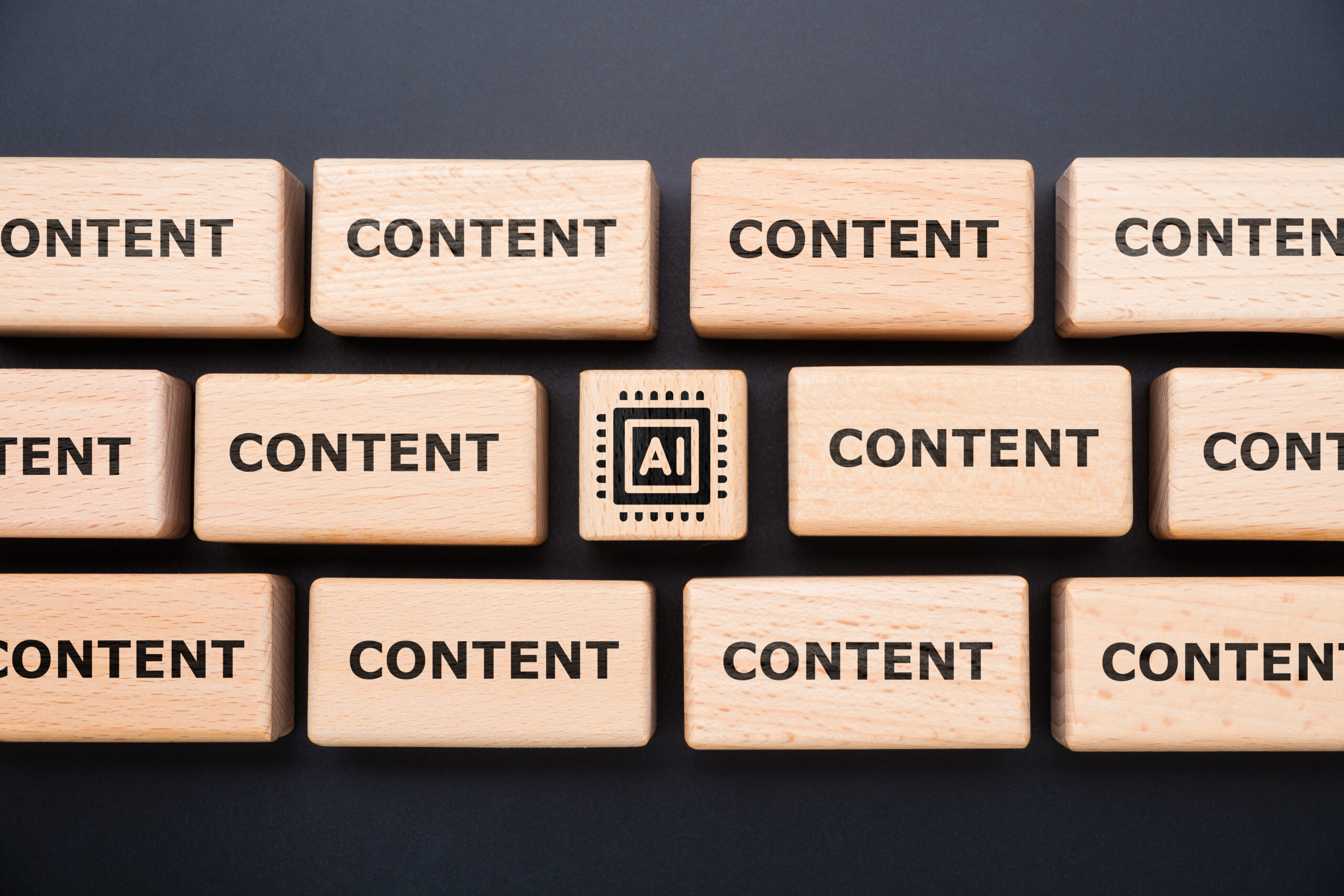
As AI accelerates content production, Chris Van Wingerden stresses that L&D teams face a new bottleneck: managing the volume of learning content they can create. Drawing on dominKnow’s LCMS Report, he explores why content management, governance and human oversight are becoming essential to keeping AI-generated learning trustworthy, compliant and useful.
For years, the learning industry has focused on one persistent challenge: creating enough content to keep pace with organisational change. Today, that challenge looks very different. AI has transformed the speed at which learning teams can develop courses, guides, videos and knowledge resources. Thanks to mainstream tools like ChatGPT, Claude and specialist AI authoring tools, tasks that once took days can now be completed in hours, and in some cases, minutes.
38% of respondents saying managing and updating content is the biggest barrier to achieving business value
While in many ways, that’s a positive, it has also exposed a new bottleneck that many organisations weren’t prepared for: suddenly needing to manage the huge amount of content. The latest Learning Content Management System (LCMS) Report from dominKnow highlights just how significant this shift has become, with 38% of respondents saying managing and updating content is the biggest barrier to achieving business value. Even more strikingly, more than twice as many respondents identified content management as their primary challenge compared with content creation.
This represents a fundamental change in priorities for L&D and shows that more content doesn’t always make the lives of L&D professionals easier.
The hidden cost of content abundance
AI has democratised content production. Almost anyone can generate learning materials using prompts and large language models (LLMs), meaning organisations are creating more content than ever before. But quantity brings its own complications.
Every new course, policy update, job aid or microlearning module needs reviewing, approving, maintaining and eventually retiring. Without robust governance, 33% of organisations say that duplicate resources, conflicting information and outdated materials reduce trust in the learning experience. Ironically, the easier content becomes to produce, the harder it becomes to control.
This creates risks beyond learner frustration or behind-the-scenes confusion. In highly regulated industries like healthcare or finance, outdated content can introduce compliance issues. In fast-moving sectors like retail or hospitality, employees may unknowingly follow obsolete processes. Even in less regulated environments, inconsistent learning materials undermine confidence and slow performance, making the lives of learners and L&D professionals alike unnecessarily complicated.
What dominKnow’s new report makes clear is that creating more content doesn’t automatically create more value. Managing content effectively does.
Quality matters more than quantity
For many years, success in workplace learning was measured by volume. How many courses were launched? How many modules were completed? How quickly could new training be produced? Increasingly, however, those measures are becoming less meaningful. More, more, more isn’t always the answer, and as we’re finding in 2026, more content often means more problems.
Modern learners don’t necessarily need more learning resources. They need the right learning resource, at the right moment, with confidence that it’s accurate and up to date. It sounds simple, but it’s surprisingly hard to get it exactly right, especially when it’s so easy to pump out e-learning course after course.
This requires a shift in mindset. Rather than asking, ‘How can we create content faster?’, L&D teams should be asking, ‘How do we ensure our content remains trustworthy, current and easy to find?’. That means investing as much effort into content lifecycle management as initial content development. It’s not the glamorous part of L&D, but it’s arguably one of the most important.
Governance is becoming a competitive advantage
As learning libraries continue to expand, governance can no longer be treated as an administrative afterthought. Strong governance enables organisations to answer important questions such as:
- Who owns each piece of content?
- When was it last reviewed?
- Has every stakeholder approved the latest version?
- Which learning assets are now obsolete?
- Where is the same content being reused?
Without clear answers, content quickly becomes fragmented across teams, departments and systems. Rather than just slowing down workflows, effective governance creates confidence that learning assets remain accurate while reducing unnecessary duplication and making updates significantly easier.
When organisations manage content strategically, they spend less time rebuilding existing materials and more time improving learner outcomes.
Reviewing content shouldn’t be a bottleneck
Review cycles are often where learning projects lose momentum. In fact, 74% of organisations say their systems restrict how efficiently they can manage and update content, so it’s no surprise that on average, 46% of learning content is outdated, inaccurate or in need of revision,
Content passes between subject matter experts, compliance teams, instructional designers and business stakeholders through long email chains and multiple document versions. Feedback becomes fragmented, conflicting comments emerge, and nobody is entirely sure which version is the latest. The result is delays, duplicated effort and avoidable frustration.
Modern learning content management systems increasingly address this through collaborative review workflows that centralise feedback, track revisions and maintain a single source of truth throughout the content lifecycle. Instead of treating reviews as isolated events, organisations can embed them into ongoing governance processes, making updates faster while improving overall quality.
AI still needs human judgement
As AI capabilities continue to evolve, another question naturally follows: if AI can create learning content so quickly, should it also decide what gets published? For most organisations, the answer is no. Instead, a more sustainable approach is emerging: using AI intentionally while maintaining human expertise.
AI can accelerate drafting, suggest improvements, assist with rewriting and support translation, while people retain responsibility for accuracy, instructional quality, governance and final approval. This ‘human in control’ approach, where human expertise is augmented by the efficiency of AI, helps organisations realise AI’s productivity benefits without sacrificing trust, consistency or quality.
The next challenge for L&D
49% of learning leaders expect AI to have a significant or transformational impact on learning content in the next two to three years. However, only 23% say they are completely confident in their AI-generated content aligning with organisational policies and compliance.
This shows that L&D teams need to shift the conversation from content creation to how effectively they can manage their content – particularly content that’s been created with AI.
There’s no doubt that AI is going to be a permanent fixture of learning content creation in the years to come. But as AI continues to accelerate production, content management is becoming the defining capability that separates high-performing L&D teams from those overwhelmed by growing learning libraries.
Any learning team can create content at speed and in huge volumes thanks to AI. What some teams are doing differently is prioritising content management, including what they have, where it lives, who owns it, when it needs updating and how to build learner trust in content. Because in the age of AI, faster content creation isn’t the destination. It’s simply the beginning of a much bigger content management challenge.
Chris Van Wingerden is Senior VP of ONE Success at dominKnow

If this article piqued your interest, you’ll probably find value in our conference!
Find out about keynote speaker Erica Farmer, her opening session on the
AI Fire Hydrant and what it means for productivity, performance and L&D
Don’t miss 50% off your ticket for the first 30 only!
