
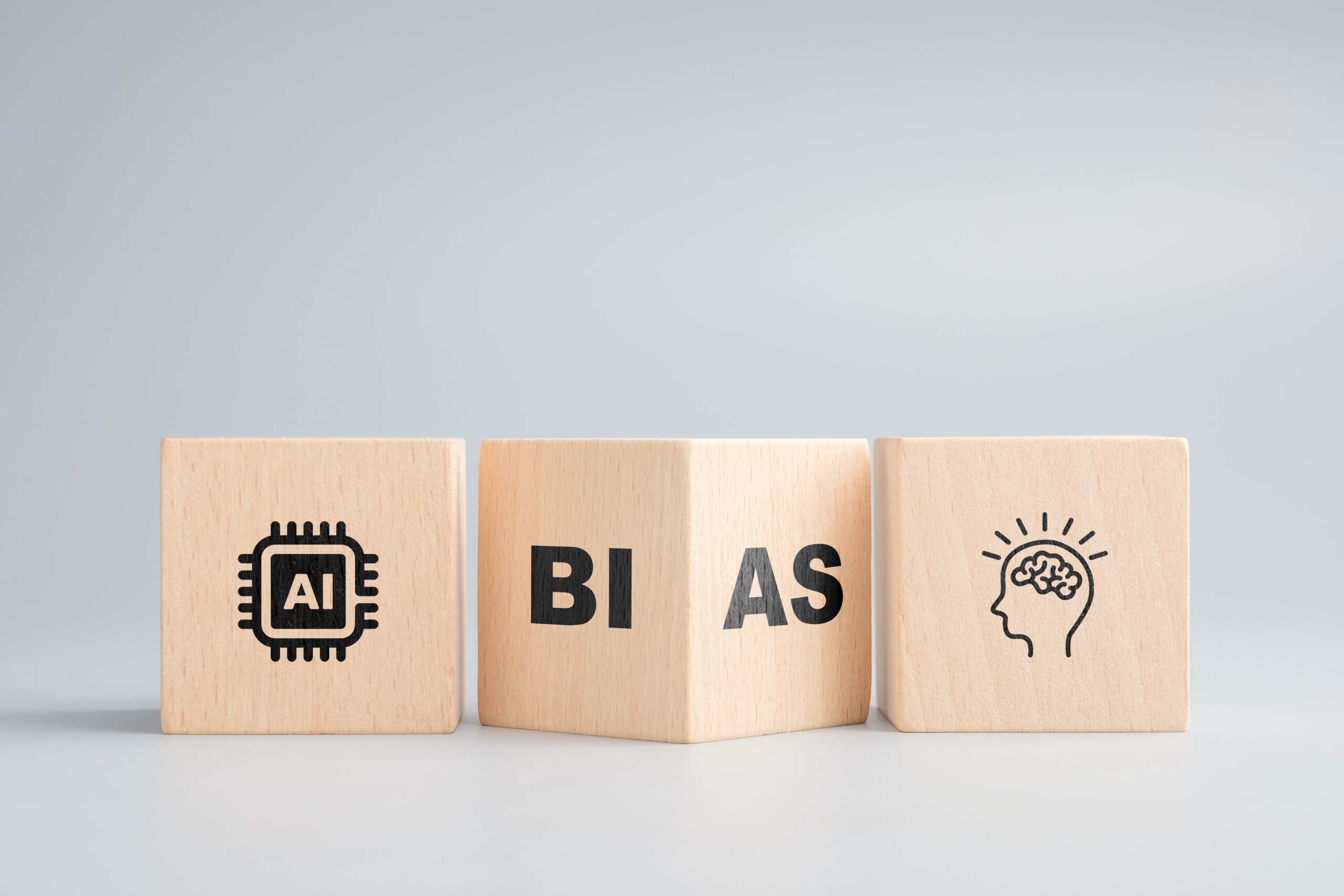
AI promises smarter decisions, but can it also reinforce the assumptions organisations need to challenge? Jennifer L. Bryan explores why diverse perspectives, psychological safety and better questions matter when adopting AI, and how leaders can prevent powerful technology from turning familiar biases into increasingly convincing answers that nobody dares question.
Artificial intelligence is changing how organisations gather information, analyse problems and make decisions. Yet as businesses rush to adopt increasingly powerful AI tools, there is a less obvious organisational risk that deserves greater attention: AI could make our existing echo chambers more powerful.
The information we provide and the outputs we choose to act on are all shaped by human judgement
AI has enormous potential to broaden our thinking. It can process vast amounts of information, generate alternative scenarios and challenge assumptions. But technology does not operate independently of the organisations using it. The questions we ask, the information we provide and the outputs we choose to act on are all shaped by human judgement. If that judgement is constrained by an organisational echo chamber, AI may not disrupt it. It may simply make it faster.
The problem existed long before AI
I recently hosted the Breaking the Echo Chamber: Real Voices, Real Change event, bringing together people from different disciplines and perspectives to explore how organisations can challenge the assumptions that influence decisions.
One thing became clear: echo chambers are rarely created deliberately. They emerge through everyday organisational behaviours. We recruit people who fit our culture. We promote people who have succeeded within our existing system. We ask those we already know and trust for their views. We organise around functions, disciplines and hierarchies. Over time, the same voices become increasingly influential.
The result isn’t necessarily a lack of diversity. It is a lack of different perspectives at the moments when they matter most. Sometimes those perspectives aren’t in the room. Sometimes they are in the room but don’t feel able to speak. And sometimes they speak, but their contribution is dismissed because it challenges the narrative that has already formed.
Now AI is entering that system, and it can amplify the initial question. Imagine a leadership team that has decided the primary challenge in a transformation is productivity. It asks AI to identify opportunities to improve productivity. AI produces a sophisticated set of recommendations.
The analysis may be excellent. But what if productivity wasn’t the real problem? Perhaps the issue was poor user experience, lack of confidence, weak leadership sponsorship or a failure to understand how work actually happens.
AI hasn’t necessarily failed, the question failed. This is why I believe one of the most important skills for leaders in the AI era will be the ability to distinguish between an intelligent answer and an intelligent question. More information does not automatically produce better decisions. We need the perspectives that help us understand what we may be missing.
Different voices create better questions
This was one of the strongest lessons from Breaking the Echo Chamber, bringing different perspectives together didn’t produce one harmonious view. It produced better questions and that is the real value of diversity of thought. It isn’t about ensuring everyone agrees. It is about making it harder for an organisation to become overly confident in its own assumptions.
This matters enormously for AI adoption. We often talk about whether people are ready to use AI: whether they have the skills, understand the benefits and have received the right training but we should also ask: Do people feel able to challenge it?
Will an employee question an AI-generated recommendation because it doesn’t reflect their experience? Will a subject-matter expert challenge an output that looks authoritative but misses an important contextual detail? Will someone junior enough to have the most relevant insight feel safe enough to say, “I don’t think this is right”? These aren’t technology questions. They are questions about leadership, culture and psychological safety.
We can use AI to break the echo chamber
There is an opportunity here that organisations should embrace. Instead of using AI simply to confirm our thinking, we can deliberately use it to challenge us. Ask it to identify our assumptions, to construct the strongest argument against our proposed strategy or to consider the perspective of an employee, customer or stakeholder who isn’t represented in the room.
Ask questions such as:
- What are we missing?
- What evidence would contradict our conclusion?
- Whose perspective have we not considered?
- What question should we be asking that we aren’t?
Used this way, AI becomes more than a productivity tool, it becomes a mechanism for intellectual challenge. The technology cannot do that on its own, leaders have to create the conditions in which challenge is valued.
The future of work needs better conversations
There is an irony here. At a time when technology is giving us unprecedented access to information, our competitive advantage may increasingly depend on something much more human: our ability to listen to perspectives that challenge us.
AI can process information at extraordinary speed, and it can generate ten possible solutions. It cannot automatically recognise when the pattern reflects an organisational blind spot or determine whether we are solving the right problem. That remains our responsibility.
The organisations that benefit most from AI will not necessarily be those that deploy the most technology. They will be those that create the conditions in which technology and human judgement complement one another.
That means designing decision-making processes where challenge is expected rather than exceptional and listening to the people closest to the work. It also means using AI not simply to reinforce what an organisation already knows, but to expose what it may not know.
The question facing leaders is no longer simply whether AI will change how we work. It is whether we will use AI to challenge the way we think.If we use it to confirm what we already believe, we haven’t broken echo chambers, we have automated them.
Jennifer L. Bryan is Chief Empowerment Officer at ABChange Consultancy Ltd and author of books about change
If this article piqued your interest, you’ll probably find value in our conference!
Find out about keynote speaker Erica Farmer, her opening session on the
AI Fire Hydrant and what it means for productivity, performance and L&D
Don’t miss 50% off your ticket for the first 30 only!
