

A new quarterly column explores what training demand can reveal about the challenges organisations are trying to solve. In this first instalment, Dr Peter Evans examines how search behaviour can help L&D translate business problems into stronger proposals, better evidence and more persuasive conversations with the people who own outcomes.
When TJ asked L&D professionals what stops them turning evidence into action, the most common answer was access to the people who own outcomes, ahead of both tools and time. 40% said they were not ready, or only a little ready, to make that leap. One delegate put it plainly: involve us at the beginning of any conversation about change.
…The problem in their own words…
Here is the awkward part. Some of those conversations are already happening without you.
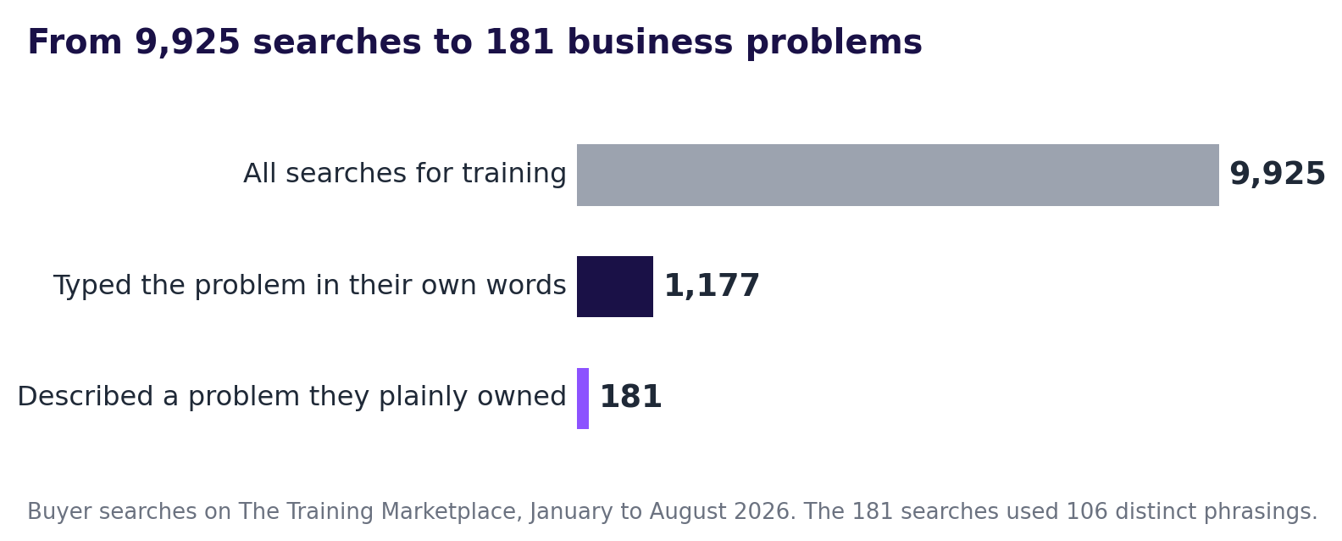
Between January and August 2026, buyers ran 9,925 searches for corporate training on our platform. Most picked a category from a list. But 1,177 ignored the list and typed the problem in their own words, and within those, 181 searches across 106 distinct phrasings described a problem the buyer plainly owned.
Data and searches
For anyone who has not come across us, The Training Marketplace is a free platform, funded by the industry, where HR and L&D teams search and compare nearly 8,000 verified training providers.
Nobody pays to search and nobody is obliged to buy, so what people type tends to be an honest record of what is worrying them, rather than what they think they ought to ask for.
They read like this:
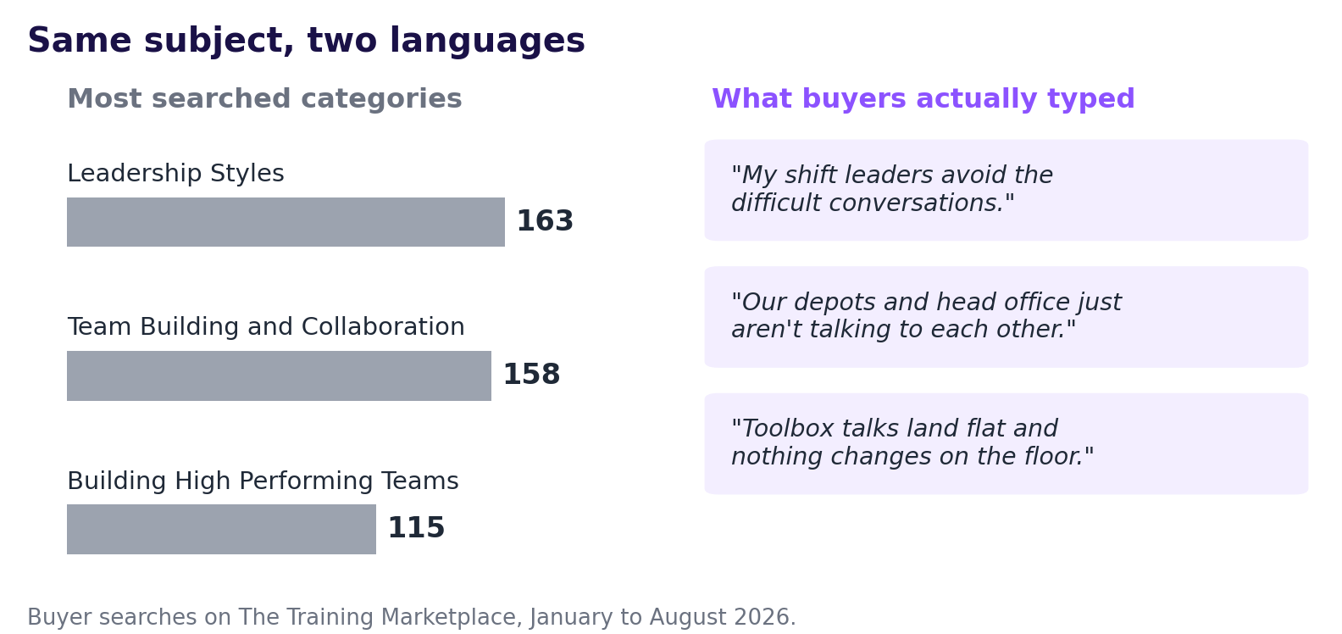
- “My managers are technically brilliant but we keep losing staff.”
- “My frontline managers need development but never have time for training.”
- “How do I get managers to change behaviour, not just tick a course?”
Nobody types that sentence about somebody else’s department. That is an operational leader at eleven o’clock at night, describing the thing that is costing them, in the language of what it is costing them.
Now set those against the most searched categories over the same period:
- Leadership Styles, 163 searches
- Team Building and Collaboration, 158
- Building High Performing Teams, 115
Same subject, completely different language. One is a symptom with a price attached the other is a curriculum heading.
That gap is the useful bit, and it works in two directions.
- Evidence
The TJ report’s second enabler is access to usable data, and the quote underneath it is somebody asking where on earth they are meant to find it.
Some of that data is right here: current demand, freely available, and phrased in the language your own executives use when they simply describe the problem they need solving. - Translation
When you next write a case for management development, start with the business sentence before you name the solution.
Such as: “We keep losing good people and the exit conversations keep pointing at their managers” is a business problem that somebody has to own. Comparatively, “Leadership development programme” is a line on a budget, and lines on budgets get moved.
AI training humans…
One other thing is visible in the searches. Around one free-text query in five now runs to six words or more. Buyers are describing situations rather than naming courses, and conversational AI search may well be encouraging it.
It is worth asking which of those two your next proposal sounds like.
Dr Peter Evans is CEO of The Training Marketplace

If this article piqued your interest, you’ll probably find value in our conference!
Find out about keynote speaker Erica Farmer, her opening session on the
AI Fire Hydrant and what it means for productivity, performance and L&D
Don’t miss 50% off your ticket for the first 30 only!
