Rochelle Trow argues that today’s senior roles sit at the centre of global turbulence, where pressure rarely eases and success no longer guarantees fulfilment. Drawing on research from WEF, Gallup and Deloitte, she explores cognitive load, organisational strain and why leadership development must build inner steadiness, not just outward skills.
For decades, the message was simple: work hard, climb high, and life will feel better when you get there. Influence, control, reward. Success was expected to bring happiness. But in 2026, that concept deserves closer examination because the world leaders stepping into today are not the ones those roles were originally designed for.
Expect the next two years to be “turbulent” or “stormy”
The World Economic Forum’s Global Risks Report 2026 describes a global landscape shaped by geoeconomic confrontation, technological acceleration, societal polarisation and environmental strain. In its survey, 50% of respondents expect the next two years to be “turbulent” or “stormy”.
This context matters when we ask whether reaching the top brings happiness. Senior roles do not sit outside the system; they sit at its centre. The higher the role, the more directly those pressures land.
Success in a system that no longer pauses
Leadership has always involved pressure. That is not new. What feels different is that it rarely eases. In earlier decades, there was often a rhythm: intensity followed by recovery.
Today, that rhythm is harder to find. Economic uncertainty overlaps with geopolitical tension. Artificial intelligence reshapes industries while expectations around ethics and transparency intensify. When pressure does not ease, adaptation becomes constant.
From the outside, senior leaders may appear composed and decisive. Targets are met. Decisions are made. The organisation continues to move. Yet internally, the experience can feel different. Staying steady takes sustained effort.
This brings us back to happiness. Reaching the top may bring authority and reward. But it also brings more responsibility, more scrutiny, and bigger consequences with every decision. If the system is unsettled, the top does not shield you from it.
What the data suggests about life inside organisations
Recent workforce data reflects this strain. The Gallup State of the Global Workplace 2025 report shows that global employee engagement fell from 23% to 21% in 2024. Manager engagement dropped from 30% to 27%, and managers account for around 70% of the variance in team engagement.
Managers sit between executive decision-making and day-to-day delivery. When their engagement declines, it reflects pressure moving through the organisation.
C-suite leaders shape pace, priorities, and expectations. If those below report rising strain, it suggests the system itself is under load – and that those at the top are operating inside that same pressure, with ultimate accountability.
Deloitte’s 2024 research reports that nearly six in ten workers feel exhausted or stressed, and 66% would consider leaving for a role that better supports their wellbeing.
Taken together, the data does not prove that leaders at the top are unhappy. But it does suggest that reaching the top does not insulate them from pressure. Often, it is where pressure concentrates. Happiness at work is rarely about title alone. It is shaped by how it feels to inhabit a role.
In sustained uncertainty, cognitive and emotional load build quietly. Leaders may remain capable and committed, but more energy goes into staying composed than into reflective thinking. Sustained cognitive load increases the risk of narrowed judgement, not because leaders lack skill, but because internal capacity is under strain.
It rarely shows up as a collapse, but as a constant adjustment. Over time, that adjustment can narrow perspective and erode meaning. When the role becomes mostly about managing risk and absorbing tension, happiness becomes harder to access, even when success is visible.
What this means for organisations
If this is true, the issue is not that leadership is failing. It is that the way we prepare leaders may no longer be enough. Traditional leadership development focuses on skills: strategy, influence, and execution. These matter. But they are outward-facing. They teach leaders what to do. What they often neglect is how leaders manage themselves when pressure does not ease.
Mental health resources and wellbeing initiatives are important. But they are often reactive and only activated once strain becomes visible. What is needed is something more integrated: helping leaders develop the capacity to remain steady when conditions do not resolve.
That includes examining the beliefs that drive overextension, recognising early signs of cognitive narrowing, learning to work with fear rather than suppress it, and building regular habits of reflection before decisions compress.
Gone are the days when support could be reserved for a small group at the top. Complexity affects the whole system. Strengthening internal capacity cannot be reserved for a few; it needs to become part of the culture. It needs to start at the top. If those leading organisations are not supported to stay grounded, instability filters downward.
So, does reaching the top bring happiness in 2026?
It can. But not automatically. The top brings visibility, reward and influence. It also brings exposure to uncertainty and complexity. In a world where half of global leaders expect turbulence ahead, happiness cannot rest on position alone.
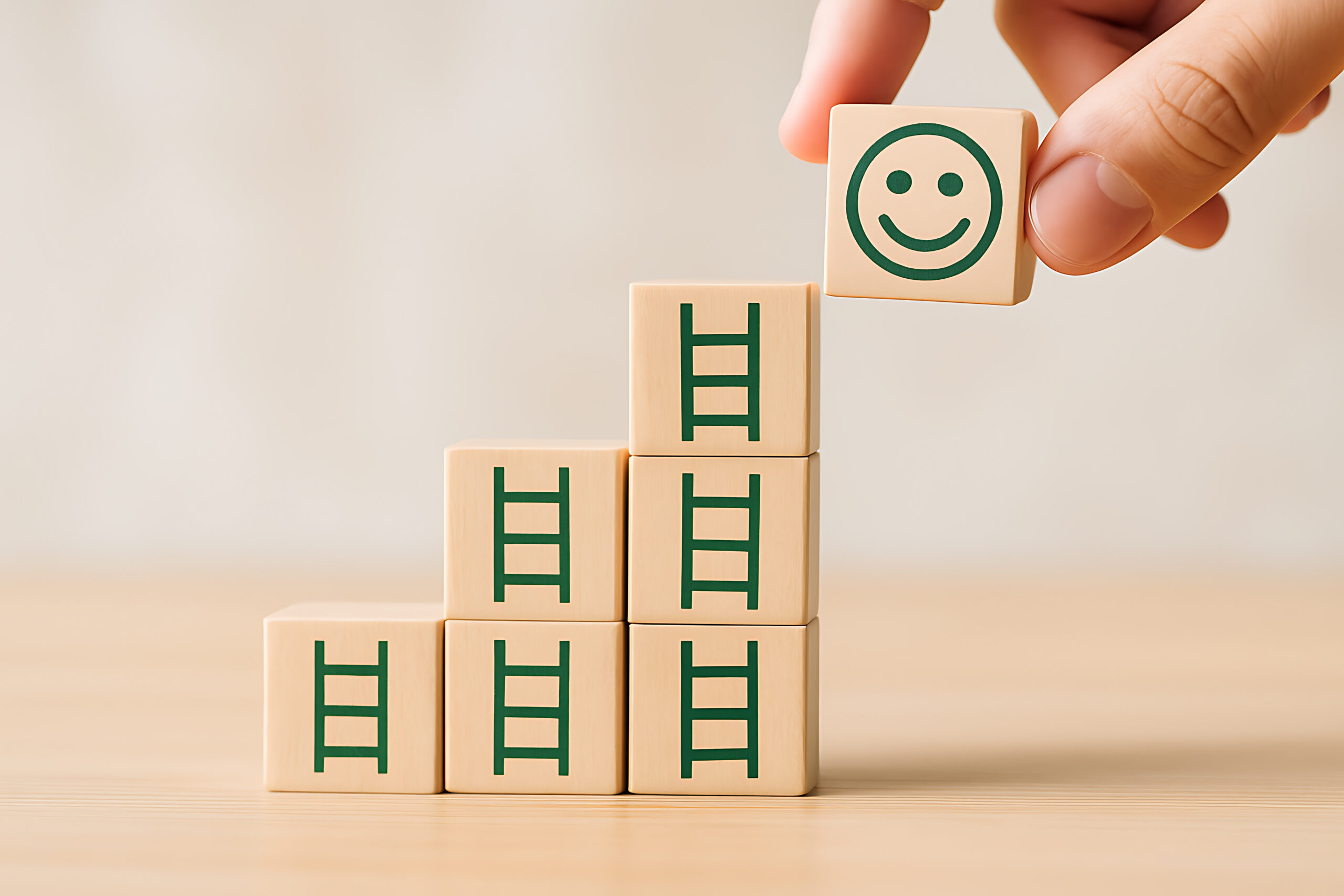
In 2026, fulfilment depends less on the height of the ladder and more on the steadiness of the person standing there. Remaining grounded while carrying that responsibility is what determines whether it truly feels like success.
Rochelle Trow is Founder, Executive Coach and HR Advisor at The Change Canvas and author of Anchored: Staying Grounded When Everything Speeds Up
