Belonging takes more than statements and symbolic support. Mark Travis Rivera shares why inclusion must be built through listening, honest conversations and everyday action. This interview explores how leaders can challenge performative allyship, create braver organisations cultures and help people feel recognised, respected and able to do their best work.
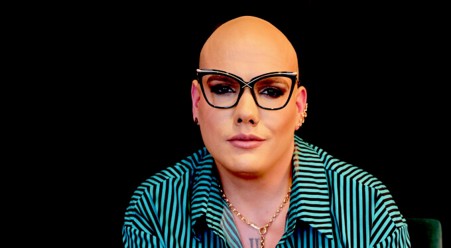
Mark Travis Rivera is an award-winning creative entrepreneur, CEO and Founder of The Professional Storyteller, and a globally recognised advocate for inclusive workplace culture. Drawing on lived experience as a Puerto Rican queer man living with cerebral palsy, he brings authenticity, empathy and strategic insight to conversations around leadership, belonging and organisational change.
Mark challenges teams to rethink power, privilege and what it truly means to create cultures where people can thrive
A sought-after diversity and inclusion speaker, Mark works with organisations across sectors to help leaders move beyond performative gestures and embed inclusion into everyday behaviours, systems and decision-making. Through storytelling, facilitation and keynote speaking, he challenges teams to rethink power, privilege and what it truly means to create cultures where people can thrive.
In this exclusive interview, Mark reflects on why so many DEI initiatives fall short, what a braver workplace looks like in practice, and how leaders can foster environments where people feel seen, heard and valued for who they are.
Training Journal: From an L&D and organisational culture perspective, how can organisations move beyond performative allyship and embed inclusion into everyday behaviours, systems, and decision-making?
Mark Travis Rivera: Well, they have to ask themselves, you know, what do you do beyond changing your logo or putting out a statement? What are you doing to ensure that employees feel a sense of belonging? You start by having the conversations. Start listening to each other. Listen to your leadership team. Listen to your colleagues. Listen to the people who report to you. And listen to what they say that they need to feel a greater sense of belonging.
And then begin to take actions to evaluate systems and policies that are prohibiting or causing a lack of belonging. The first step is to listen. The next step is to take action, informed action. Action that actually centres the people you’re trying to lead to better improve business outcomes.
TJ: Many organisations have invested heavily in DEI initiatives, yet results often fall short. In your view, why do so many programmes fail to deliver meaningful change, and what must leaders do differently to make DEI sustainable and credible?
Mark: I think part of the problem with DEI globally is that a lot of it was taken on as performative. They weren’t really interested in doing the work of listening and changing behaviour and changing policies and procedures to be more inclusive. And so, because they weren’t doing it to make substantial change, right, it felt very surface level.
I saw the bubble bursting five years ago at the height of the EI in the US and around the world, with George Floyd’s murder. I saw this bubble bursting in five years. I didn’t predict who would lead my nation where I’m from in the US in that time frame.
But I did anticipate this because when something is performative, right, and part of its performative nature was its capitalistic rise, right, like suddenly it became very profitable to do DEI and it’s been more profitable for businesses to maintain their DEI.
We saw what happened with Target in the US when they divested from the DEI initiatives. And so we know what happens to companies that have chosen not to divest, like Costco for instance. When you think about the performative nature of things, it just became this, cat and mouse chase, right? Everyone’s trying to chase the next opportunity, the next client, the next this, the next that. And everyone approaches this work differently.
For example, I don’t approach this work from a space of blame and shame. I think those are ineffective tools for creating meaningful change in people and cultures. And people make up companies, so therefore, if you’re not changing people’s hearts and minds, you’re not changing a company culture.
I really try to focus on our shared humanity. And the way I do that is by harnessing the power of stories to create a more inclusive world. Because when we take the time to listen to each other’s stories, we can see windows and mirrors. Windows that give us perspectives and insights that we otherwise wouldn’t know, and mirrors that reflect parts of who we are.
And when we can see ourselves in our neighbour and our colleague and our community member and our teachers and our doctors, that in the stories that we consume, then we know that we belong, that we’re not alone. Not feeling alone and feeling a greater sense of belonging, connecting to the people around you, is what helps foster a greater sense of belonging.
TJ: In practical, day-to-day terms, what does a “braver workspace” look like, and how can leaders and learning professionals actively foster environments where people feel safe to show up as their full selves?
Mark: A braver workspace looks like this in practice: Have the hard conversations. Lean into discomfort. Challenge your own positionality of power and privilege. See where you are powerful and privileged and use that to make a better change for the company.
You can’t guarantee psychological safety. But what you can guarantee is that if your colleagues, if your teammates show up and dare to be heard and seen for exactly who they are, you will embrace them. You will offer them a space where their authenticity is celebrated, appreciated, and amplified.
When we can’t be our full selves at work, we can’t be our best selves. And if we can’t be our best selves, then we can’t produce our best work. One of my first supervisors after I graduated university said to me, “If you can’t be your full self, Mark, you won’t be able to produce your best work. I want your best work. She embraced my gender non-conformity. She embraced my queer identity. She understood that by embracing all of who I was, she was unlocking my potential for bigger success.
And that’s what it looks like to allow for bravery and authenticity in the workplace, to create meaningful change and produce your best workers.
TJ: When you speak to leaders, HR professionals, and learning practitioners, what core message do you hope they take away about belonging, shared humanity, and their role in shaping inclusive workplaces?
Mark: That their lives matter. That their stories matter. That we all have a purpose, and that we all play a role in creating a more inclusive, prosperous, healthier global world. That we are all interconnected, and that there is nothing that separates my humanity from their humanity besides miles and miles of water, land, and air.
And that together, as a global collective, when we recognise our shared humanity and our shared stories, we recognise that the world is more alike than different. And it is in our likeness, right, that we can stop the dehumanisation, the violence, the oppression, the bigotry that so many people are facing right now around the world. Because it is harder to hate someone when you see yourself or someone you know in their story.
This exclusive interview with Mark Travis Rivera was conducted by Tabish Ali of the LGBT Speakers Agency
