
Training Journal’s 60th Anniversary conference video captures the people profession at a turning point. From celebrating 60 years of workplace learning to confronting stubborn challenges around impact, evidence and credibility, contributors share what must change next. Expect practical reflections on AI, and moving beyond content creation towards real organisational capability.
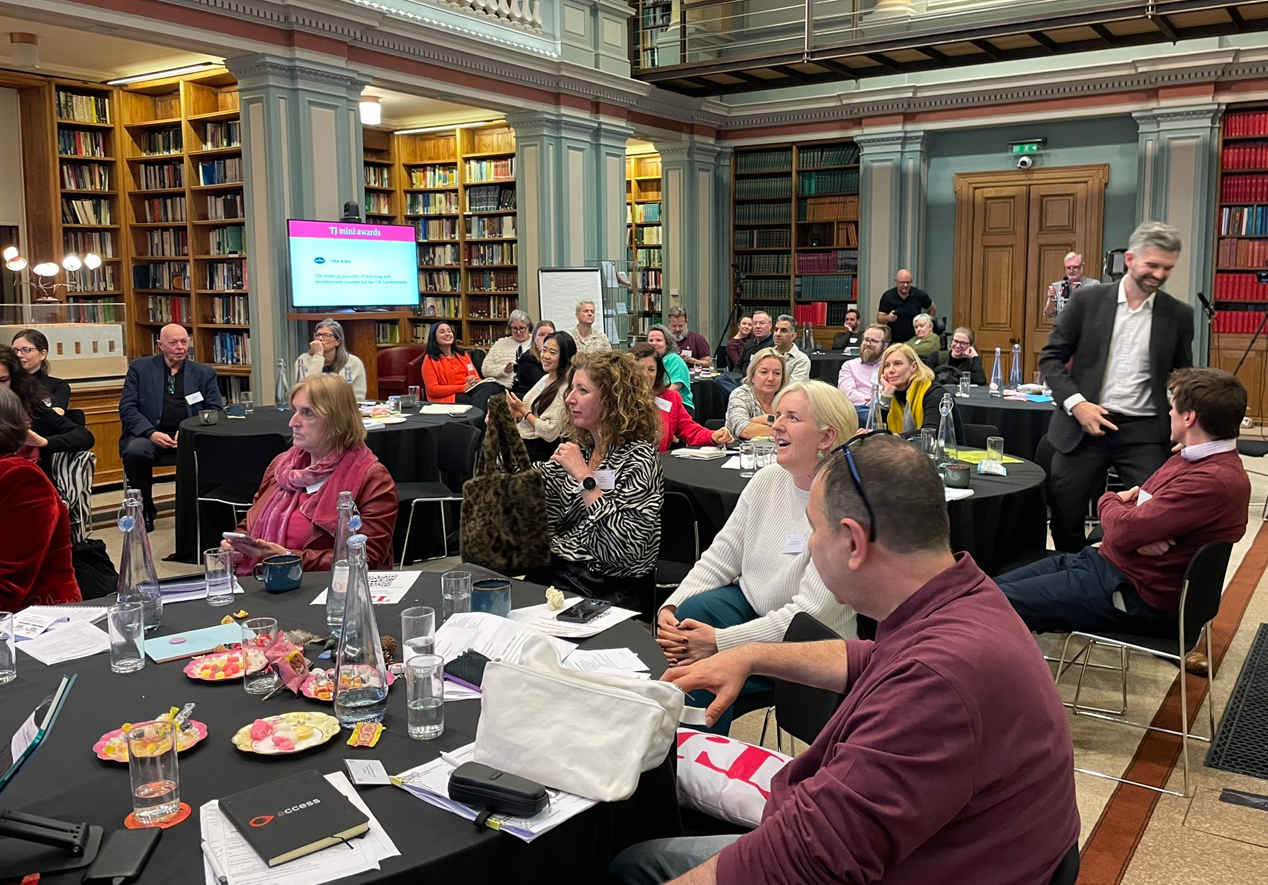
Training Journal’s 60th Anniversary Conference (TJ60) brought L&D people together in London for a day designed to celebrate the past, and sharpen what matters next. The video captures that energy through short, honest reflections from people who were in the room, including Jo Cook and contributors such as Carolyn Shepherd, Andrew Jacobs, Gaëlle Watson, Eddie Coleman, Tom McDowall, Emma Klosson and Jon Kennard.
What comes through is a set of recurring tensions L&D is still wrestling with, and a few clear shifts that feel non-negotiable now AI is changing the pace and expectations around evidence, performance, and value.
Summary:
Created by ChatGPT:
Across the interviews, the story of TJ60 is a room full of people who care deeply about the work, and who are hungry for time and space to think properly. The event format stood out because it deliberately resisted the “rush from one thing to the next” conference feel, building in breathing room to reflect, talk, and work out what you’d actually take forward.
Alongside that, the video surfaces a familiar truth: many of L&D’s core challenges have been stubbornly consistent over decades, including the struggle to have our contribution genuinely valued by the business. But the tone is not gloomy as the message is that we know what the sticking points are, and we can stop pretending they’ll fix themselves.
Key takeaways:
Created by ChatGPT:
1) Reflection is not a luxury, it’s part of the work
Several voices called out the sheer rarity of having protected time to think, research, and experiment, especially when day-to-day work feels rushed and task-oriented. The video frames reflection as a practical necessity, not a “nice extra”.
2) We still default to activity over impact
A clear thread is that L&D often gets very good at judging the quality of what we produce, but not the difference it makes to the organisation. That gap isn’t about a lack of good intent. It’s partly capability (what data would demonstrate impact, and where to find it), and partly fear (what if the data shows we did not make a meaningful difference).
3) AI raises the bar on evidence, not just efficiency
Carolyn Shepherd’s point is blunt: L&D is still rooted in legacy ways of working, and that won’t fit a world where AI can help organisations evidence and analyse performance far more easily. In that context, “adding value” stops being a slogan and becomes the entry ticket to the conversation.
4) Stop centring L&D on content
Gaëlle Watson calls out “content” as the wrong obsession, especially now AI makes it easier (and cheaper) to create learning assets. The repositioning she describes is away from being content providers and towards being the people who shape skills, frameworks, and the conditions for capability.
5) Connection with peers is still one of the highest-value outcomes
More than one reflection points to the importance of getting together with peers, seeing who’s tackling similar challenges, and feeling less alone in the work. It’s a reminder that “networking” isn’t fluff when the job is complex and often politically tricky.
6) The industry’s long-running challenges are still with us, but so is progress
Emma Klosson’s observation is both wry and reassuring: plenty hasn’t changed in 30 (or 60) years, even as we’ve made progress in other areas. The video doesn’t pretend we’ve solved the hard stuff, but it does show a profession that’s still evolving, and still willing to be honest about what’s in the way.
7) The “format” is part of the message
Jo Cook reflects on experimenting with a conference approach that was proactive and enabling, and that created space for reflection even when that isn’t everyone’s cup of tea. The point is simple: if L&D wants better thinking in organisations, we have to model what that looks like in our own spaces too.
The thread that ties it together
If there’s a single unifying idea in the video, it’s that L&D’s future influence will be earned less through output and more through outcomes, and AI will accelerate that shift. The profession doesn’t just need to “adopt tools”. It needs to step into a clearer value proposition, backed by evidence, and confident enough to measure what matters without flinching.
In the background of all of that, there’s something quietly hopeful: a room full of people who care, who want to do good work, and who are prepared to have the tougher conversations about impact, credibility, and change.
The video was filmed and produced by Kevin Davids at Raiveon.
Transcript:
[Upbeat background music]Jo Cook:
I am so grateful for everyone’s involvement today. From my boss, Tom Brown, saying, “Yes, go for it, do a conference.” Through to the lovely speakers and contributors that we’ve had working behind the scenes, helping me with my thoughts and my approach. And I’m really grateful as well for everybody who came, everybody who contributed to the conversation that we’ve had, and the conversations that we will continue to have tomorrow, and next week, and next year, and maybe not for sixty years, but that’s the impact I want for Training Journal, but also for us as individuals, and learning and development as a team, as a department, and within our organisations.
Eddie Coleman:
My key takeaway for today would be that how many people in this room really care about L&D. I come from a government department, and I’m really proud of what work I do. I’m part of an L&D team, and you know, sometimes it’s always a bit of a struggle to get people invested in it, but actually, it’s so great to see people positive in the room and people sharing their experiences. There was a lot going on. There’s a lot to process, but I’ve got a lot to think about. I made some lovely connections today, so I’m delighted to come, and I hope to come next year.
Tom McDowall:
It’s been a really interesting day, a very different range of speakers compared to what we often see at L&D conferences. Probably the most notable thing for me was the amount of time given over to reflection and thought, which I think really stands at odds with what workplaces feel like right now, very rushed, very focused, very task oriented. And maybe that’s the biggest takeaway of the day, is that we do need to take a little bit more time to think, to research, to experiment before we dive into completing the next task in front of us. Certainly, that will be my biggest takeaway from the day.
Emma Klosson:
Well, interestingly, not much has changed over the last thirty years. Well, 60 years, really. I mean, I’ve been in L&D 25 years. We’re still facing a lot of the same challenges, but we are making progress in other areas. The biggest thing for me was just connection and getting together with your peers, seeing who’s doing similar work, who’s doing different work, how we can sort of complement one another’s work, and just, yeah, that we’re all kind of in it together, I think, was the biggest thing for me.
Jon Kennard:
My reflections of today, it’s just great to see so many people that I haven’t seen for ages. I used to be Editor of TJ for four years. Jo’s currently the Editor. We worked together for quite a while, and she’s just a brilliant person to be around and she’s put an amazing day together. Debbie here as well, Debbie Carter, the Editor-in-Chief. So it was really good to hang out with them. What I really liked about the programme of the day is that, and I knew Jo would do this as well because she’s really conscientious about this sort of thing, but she put together a really, she put together a programme where there was space for reflection. And I think that’s actually really important because in a lot of these events, you get rushed from one place to the other. You can’t gather your thoughts. There’s always notes to take. There’s so many things to do. And it was really nice that at the end of each session, there’s kind of a good period, five, ten minutes maybe, where you could kind of reflect on what you learned and break out and really kind of take a little step back and work out what you’d actually learned or what you’re going to take forward and all those kinds of things, which you don’t often get to do at these kind of events.
Carolyn Shepherd:
Yeah. I think that the L&D industry will need to change because at the moment, it’s very much rooted in its past, the way that things were done. And I don’t think that’s necessarily going to fit with the requirements of the new age we find ourselves in, where AI is so capable of helping us to evidence things, analyse things, performance wise, and so forth. We are looking, when I say we, I mean business as a whole, is looking for solutions that will add value. And in order to do that, we have to, L&D has to step up to the plate and join that, that quest really. It hasn’t just got to do it in terms of what the business wants, but I think it actually is an incredibly key player. So it’s really important that it does. It has a duty really to people and culture and learning as a whole.
Andrew Jacobs:
The changes in the industry, the important one, something I’ve been talking about for years is impact. We are strongly focused on how well we do what we do, but not the difference that it makes to the organisation. And I’ve had a number of conversations on this in the last few years, and it generally comes down to two things. The first thing is, oh, I don’t know how to. So where do I find the data? What kind of data would actually demonstrate impact? The second question or the second part as to why we don’t do it is, what happens if we don’t actually make any significant difference on an organisation? And there’s a fear of being about being found out as an L&D function…Um, and that’s a hard one to challenge.
Gaëlle Watson:
So if there was one thing I think the L&D industry should stop focusing on is content. Now that we’ve got artificial intelligence, we need to actually totally rethink about our approach. It’s something we’ve been talking a lot for a long time, but now I think it’s upon us. And we definitely need to reposition ourselves not as in content providers, but as in skills and actually more at high level framework than the actually the nitty gritty of the ‘how’ because this can easily be design created by other clever tools that are available…a lot cheaply and a lot more than it used to be even five years ago.
Jo Cook:
There’ve been some amazing learning moments today, and it’s everything from the feedback about the format, the approach of the conference, being proactive, enabling, and also things like the space that we had for reflection, the type of reflection that we had, which wasn’t always everybody’s cup of tea, but everybody learned something and got something from it. Also, there were key learning points from the archives of TJ that are on the website, which is around some things have not changed much since the sixties. Obviously, things like technology and approaches to humans as a whole has, which is largely positive. But some of the key things we’re grappling with, such as making sure that our contribution is valued by the business, are perennial things, and we continue to work on dealing with those.