Nicola Pye argues that purpose only delivers results when leaders practise it daily, not just talk about it. Drawing on research and frameworks, she shows how to build the capabilities behind clarity, connection and energy, avoid the “purpose paradox,” and embed purpose into performance, coaching and succession for sustainable impact.
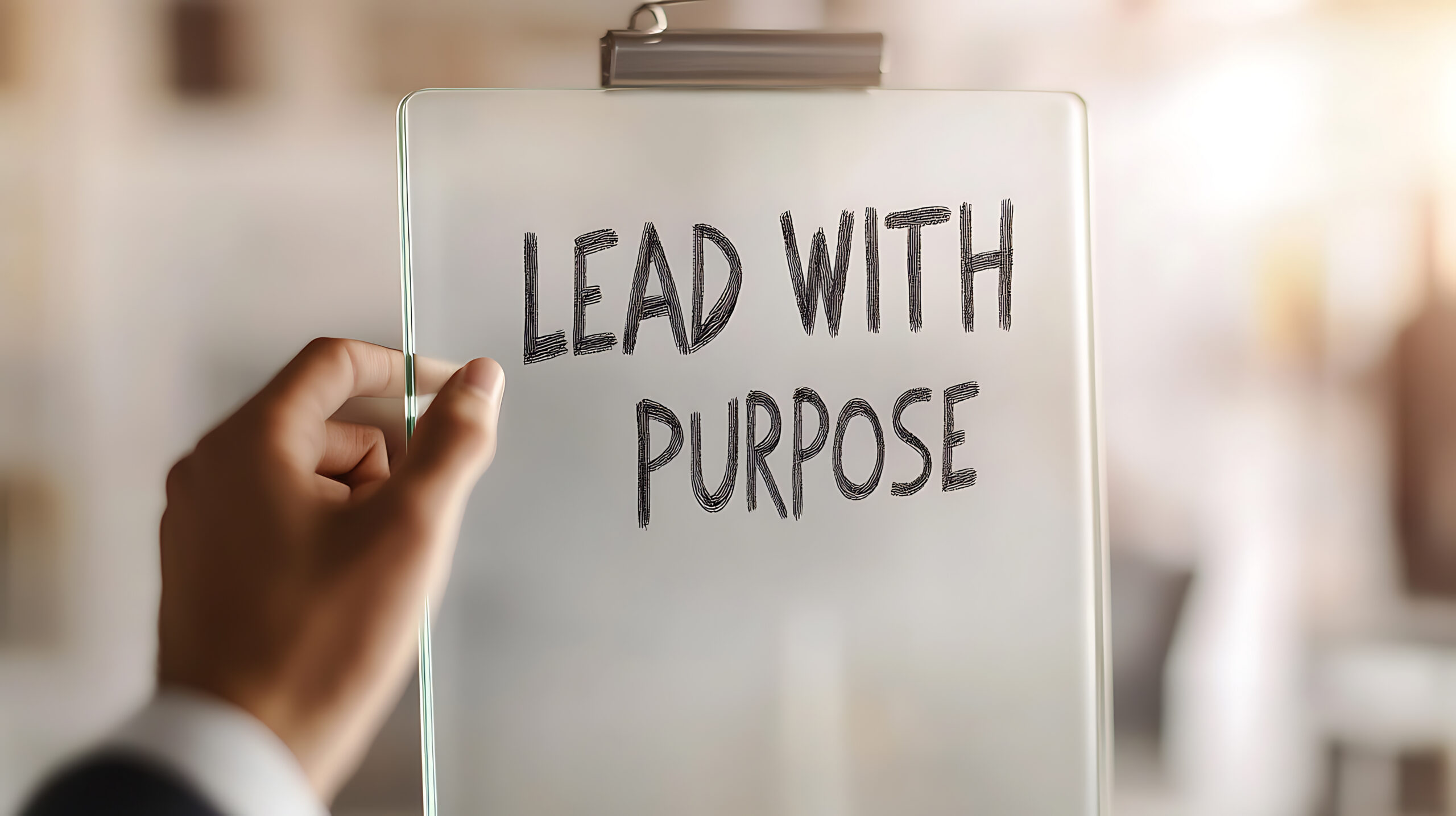
Purpose is more than a statement on the wall. It’s a spark that, with the right practice, fuels clarity, connection and energy in leadership. For L&D, the challenge is clear: help leaders turn purpose into purposeful leadership and unlock performance that lasts.
We’ve been sold a myth about purpose. Too often it’s described as if its hidden treasure waiting to be discovered in a single flash of inspiration. Or it’s mistaken for a lofty mission statement, a set of values on a wall, or a rousing speech at the annual conference.
Purpose is a spark: it gives us energy, motivation and meaning
Tapping into purpose brings huge benefits for leaders and for organisations. Purpose is a spark: it gives us energy, motivation and meaning. What turns that spark into results is purposeful leadership. Purposeful leaders practise purpose every day: they align decisions with values, navigate contradictions, and use stories to create clarity, connection and energy.
Learning and development teams know that purpose matters and many have risen to the challenge, encouraging self-discovery and building it into development plans. Yet purpose needs to move beyond reflection to real capability-building. It’s not just a mindset; it’s a skillset too and L&D has a crucial role to play.
The mandate for L&D
The demand for purposeful leadership has never been clearer. Deloitte’s 2025 Gen Z and Millennial Survey found that that roughly nine in 10 Gen Zs (89%) and millennials (92%) consider a sense of purpose to be important to their job satisfaction and wellbeing.
Purpose matters for organisations, too. In The Long-term Business Case for Corporate Purpose Wharton management professor Witold Henisz shows that companies with a clearly defined corporate purpose outperform peers in innovation and transformation, with stronger engagement and customer loyalty.
In research I carried out for The Purpose Papers, I found that purposeful leaders share specific traits: they are master storytellers, they hold contradictions with agility, they make their values visible, and they understand that purpose is not a solo sport. These are capabilities which we can develop.
The risk is that if organisations stop at having purpose as a statement without helping leaders practise it, they fall into what I call the purpose paradox. Leaders feel the pull of inspiring words, but without the habits, tools or support to live them, purpose becomes pressure. Leaders overextend, push beyond healthy limits, and confuse relentless effort with impact.
As Amy Brann, neuroscientist, notes in the Purpose Papers, a clear sense of purpose activates brain systems linked to reward, meaning and long-term goal pursuit. That’s powerful, but without tools or an “off switch,” leaders risk running on empty.
As one CEO of a purpose-driven tech business told me: “Having a purpose isn’t the same as being purposeful – being purposeful is where the magic happens.” Purpose is the spark, but purposeful leadership is the skillset that ensures it fuels growth.
What purposeful leadership looks like
Purposeful leaders demonstrate the ability to do three things:
- Create clarity
- Build connection
- Tap into collective energy
Clarity means self-awareness and alignment between words and actions. These leaders ground decisions, priorities and budgets in their values, making them visible not just in strategy but in the everyday. They create this clarity for others too, showing how each role contributes to the overall mission.
Connection is about shared ownership and collective focus. Purpose thrives where individual efforts are aligned towards shared goals. Purposeful leaders make this tangible: they link team objectives to the bigger “why,” establish clear interdependencies, and celebrate progress so it feels like a collective win, not solo heroics.
Energy is the third thread. Purpose creates a more sustainable source of motivation than short-term wins. Leaders who act with purpose access reward and meaning systems in the brain that create lasting drive, not fleeting enthusiasm.
But none of this is neat. The leaders I work with describe purposeful leadership as messy, ambiguous and full of contradictions. They speak about being both resilient and vulnerable; visionary and commercial; focused on the big picture while curious about the detail. They hold today’s pressures in one hand and a legacy mindset in the other. And perhaps most importantly, they understand that purpose is bigger than the individual – it is about creating the conditions for everyone to thrive.
From frameworks to practice
For L&D, the challenge is to translate these insights into practice, not by adding new frameworks, but by applying existing ones through a purposeful lens.
A good example is Kouzes and Posner’s Five Practices of Exemplary Leadership®, it’s a model many in L&D know well: model the way, inspire a shared vision, challenge the process, enable others to act, encourage the heart. Purposeful leaders “model the way” by aligning behaviour with values. They “inspire a shared vision” not through slogans but by telling stories that connect people to meaning. They “challenge the process” by holding contradictions, not defaulting to easy answers. They “enable others to act” by creating shared ownership of purpose, and they “encourage the heart” by linking achievements to what really matters.
The same is true of practical coaching frameworks. With GROW (Goal, Reality, Options, Will), leaders can be encouraged to frame their Goal not only as a business outcome but as an impact statement: what difference do they want to make? In exploring Reality, they can reflect on whether current actions align with their values. In Options, they can test choices against purpose as well as performance. And in Will, they commit to the purposeful behaviours they want to practise.
With SMART (Specific, Measurable, Achievable, Relevant, Timebound), goals should of course be Specific and Measurable – but they should also be Anchored in values (rather than just Achievable) and Relevant to long-term purpose, not short-term results. Time-bound then becomes a commitment to practice, not just delivery.
Other familiar tools can be adapted in the same way. 70:20:10 becomes an invitation to practise purpose in the flow of work in the everyday conversations, feedback moments and small decisions that add up to culture.
The opportunity here is to make purpose the golden thread that runs through these trusted frameworks.
Why it matters to business
The value of purposeful leadership isn’t only cultural; it’s commercial. When leaders practise purpose, they create results for their organisations. As one leader told me: “Purpose creates alignment and momentum. When everyone knows why they’re here, they take pride in their work.”
They also create resilience. Again, Amy’s neuroscience insights tell us when leaders are connected to meaning, the brain is less likely to trigger chronic threat responses and more able to access adaptive coping pathways. Purpose buffers against stress and supports broader, more strategic thinking.
They also create growth. Purpose links today’s tough decisions to tomorrow’s legacy, ensuring that the pursuit of results is tethered to values. For younger generations in particular, that authenticity is non-negotiable.
For L&D, the message is clear. Purposeful leadership isn’t a soft add-on. It’s the mindset and skillset shift that underpins sustainable performance.
Making it real for L&D
Too often, purpose is treated as a one-off exercise rather than a daily practice. L&D can shift this by embedding purpose into the systems they already shape. Performance management can move beyond tasks and targets to connect goals with what energises individuals and the impact they want to have. Feedback conversations can highlight not only what was delivered, but why it mattered and how people tapped into their unique skills and experience to do it.
Succession planning can shift too. Future leaders should be assessed not just on technical capability, but on their ability to energise others through clarity and connection. The leaders who thrive are often not those with the loudest voices, but those who make purpose visible in their decisions and behaviours.
And then there are the interventions that bring this to life. Storytelling labs can help leaders shape and share their personal narratives. Contradiction coaching, supported by 360 feedback, can help them flex across opposing demands. Purpose resets can build reflection and recalibration into the rhythm of leadership, preventing drift and burnout. Team purpose workshops can connect individual “why” and values with collective mission, creating shared ownership and energy.
These aren’t abstract programmes, they are practical ways of making purpose the golden thread of leadership performance.
The reframe
Purposeful leadership isn’t innate, it isn’t optional and it isn’t something to leave to chance. Having purpose is not the same as leading purposefully. The former is a motivation. The latter is a capability, one that requires clarity, practice, and support. That’s the mindset shift. And it’s one that L&D must back.
Audit your programmes. Look at the expectations you set for leaders. Ask whether you’re teaching skills in isolation, or whether you’re helping leaders practise the clarity, connection and energy that make purpose sustainable.
Purpose is not about treasure hunts or slogans. It’s about leaders showing up every day with intention. If L&D can back that mindset and skillset shift, we’ll create better leaders who work with clarity, connection, energy. On top of all of that our organisations turn purpose into sustainable performance.
Nicola Pye is a leadership coach, culture consultant and author of The Purpose Papers
