When facilitated badly, leadership gatherings waste time and money. Facilitated well, they create energy, commitment and momentum. Laura Thomson-Staveley shares her fabulous toolkit for turning meetings into engines of collaboration. From Liberating Structures to visible accountability, she shows how skilled facilitation can transform in-person time into outcomes leaders can’t ignore.
Picture this: 50 people in a room equals 50 working days of investment. Are you getting genuine value from that time, or watching one person dominate while others mentally check out? After years of facilitating leadership gatherings, I’ve learned that the difference between productive collaboration and expensive time-wasting comes down to one thing: skilled facilitation.
The secret isn’t about sharing more content
The stakes are high. In our hybrid workplace, leaders are increasingly selective about when they’ll invest in face-to-face meetings. When they do commit to traveling and gathering, they require exceptional returns. The secret isn’t about sharing more content – it’s about generating meaningful dialogue that drives real outcomes.
Start with equal voice, not hierarchy
One of my most valuable discoveries has been Liberating Structures, co-developed by Henri Lipmanowicz and Keith McCandless. It’s an umbrella term for approximately 25 different techniques designed to ensure everyone has an equal voice. These methods prevent the typical scenario where one person dominates while others remain silent. The technique that consistently delivers remarkable results is the ‘25/10’ approach:
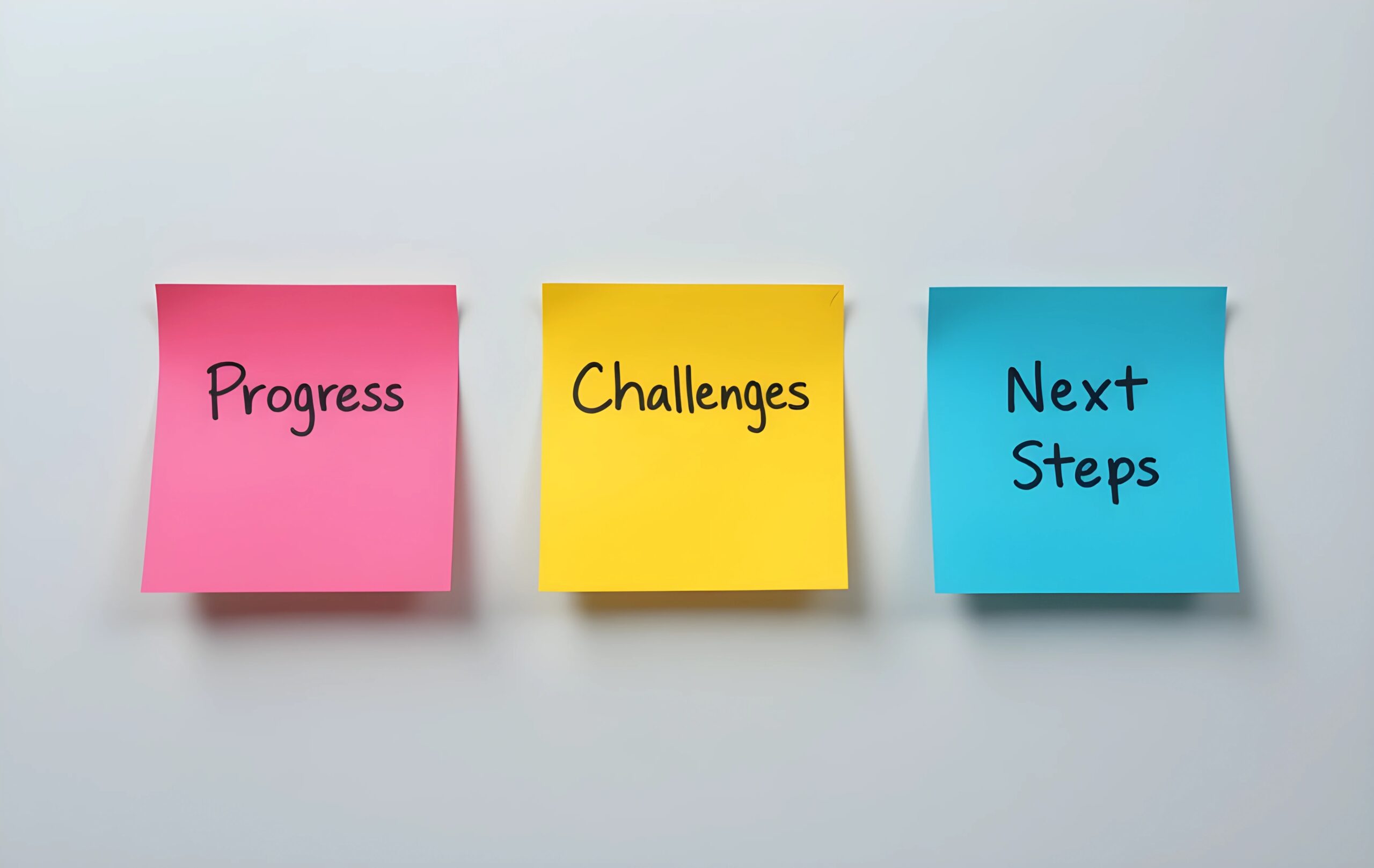
- Give everyone a card or Post-it note and five minutes to write responses to two specific questions. For example: ‘What is a hot topic that needs to be on our radar?’ and ‘What would be the first step forward?’ This dual approach captures both problems and potential solutions from every participant
- Here’s how it works: Everyone stands up and networks throughout the room, exchanging cards with 10-20 different people over about 20 minutes. Each time someone receives a new card, they rate the hot topic on a scale of 1-10 for importance
This process achieves three powerful outcomes simultaneously: it generates energy and rapport, ensures every voice is heard equally, and creates a transparent ranking system for prioritisation. The beauty lies in its democratic nature. Instead of traditional hand-raising and board lists, we create dynamic interaction that energises the entire room.
Use familiar frameworks to accelerate progress
Once we’ve identified our hot topics, it’s important to organise participants into discussion tables, each focused on one priority area. People choose their table based on personal interest, ensuring engagement from the start. This is where the real work begins and I’ve found my favourite review framework invaluable: current state, goal state, what needs to change and roadmap development.
For current state analysis, I rely on the ‘SWOT methodology’, listing strengths, weaknesses, opportunities and threats. Everyone understands it, making it an efficient starting point for flip chart discussions. Then we move to goal state visioning. I’ve found the year 2030 particularly compelling as a target because many organisations already have plans extending to that horizon.
The ‘what needs to change’ conversation follows a ‘Start-Stop-Continue’ format, which participants find intuitive and comprehensive. Finally, we develop roadmaps using a ‘Now-Near-Far’ timeline. If 2030 is our destination, ‘Now’ becomes 2026-27, ‘Near’ extends to 2028-29, and ‘Far’ reaches our 2030 goal.
Structure your day for psychological momentum
This approach fits perfectly into a full-day format I’ve refined: morning reviewing, afternoon previewing. By lunchtime, participants have transparently identified priorities, engaged in substantial conversations within structured frameworks, and feel the satisfaction of meaningful progress. Leaders from different organisational areas have collaborated effectively, sharing understanding and extracting valuable insights.
The afternoon shifts to action planning, examining change enablers and blockers. This progression creates a ‘dopamine hit’. It gives participants the opportunity to arrive thinking about problems and leave discussing concrete action plans.
Make commitment visible and memorable
One robust facilitation tool, that transfers to any gathering, involves the power of visual commitment. When groups present their action plans, I encourage them to stand together for a photo by their plan outlined on a flip chart. This simple act transforms abstract commitments into tangible accountability.
When participants later receive follow-up materials containing these photos, the visual reminder carries real meaning. They remember standing with their teammates, publicly committing to specific outcomes.
Photos instantly transport people back to that moment of collaboration and shared purpose. If you want to increase commitment, create action plans. If you want momentum, take team photos.
Make in-person time irreplaceable
These techniques have become particularly valuable in our 2025 hybrid workplace environment. The positive feedback I’m receiving consistently emphasises the irreplaceable value of in-person collaboration. Enabling intimate conversations without recording devices, authentic chemistry and deep collaborative potential that video calls simply cannot replicate.
People will travel for genuinely valuable face-to-face experiences. They understand that certain levels of collaboration require physical presence, the energy of shared space, and the spontaneous connections that emerge when groups work together intensively.
As facilitators, trainers and leaders, our responsibility is ensuring these precious in-person opportunities deliver exceptional value. When we apply structured facilitation tools thoughtfully, we transform routine meetings into powerful engines of collaboration, insight and commitment. The investment in facilitation skills pays dividends in accountable engagement, tangible outcomes and trackable organisational momentum.
Laura Thomson-Staveley is co-host of the Secrets from A Coach podcast and Founder and Leadership Coach at Phenomenal Training
