
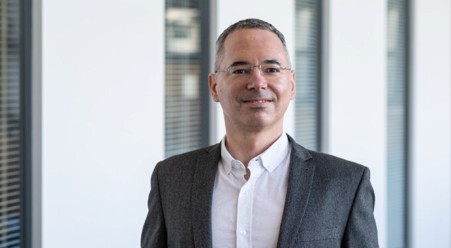
Dr Alex Zarifis says UK firms will only unlock AI value when leaders redesign processes and business models, not just add tools. He urges transparent communication to build trust without blind faith, and argues agentic AI will push leaders towards clearer, transactional direction when managing mixed human and machine teams.
UK businesses are starting to see AI’s productivity potential, but the value story is still uneven. The UK government’s 2026 AI Adoption Research found that 56% of businesses using AI reported higher employee productivity, while 77% said they had not yet seen a change in revenue. That gap matters for leaders, because AI adoption only becomes useful when people, processes and business models change with it.
That places responsibility on organisations to build trust
For L&D teams, the challenge is no longer limited to teaching people how to use new tools. McKinsey’s workplace AI research found that employers are the most trusted source of support on AI adoption, ahead of universities and large technology companies. That places responsibility on organisations to build trust, explain how AI will be used and prepare leaders to manage teams where human capability and autonomous systems increasingly overlap.
Dr Alex Zarifis, a technology expert and Lecturer in Information Systems at the University of Southampton, studies the practical applications of technology in business. His work covers trust, artificial intelligence, electronic business, blockchain, Fintech and Insurtech, with a strong focus on how technology changes decision-making, value creation and organisational behaviour.
In this interview, Dr Zarifis speaks on how leaders should rethink business models as AI moves from efficiency to value creation. He also discusses how organisations can build trust during AI-led change, and why leadership development must adapt as teams begin working alongside agentic AI.
Training Journal: When AI starts changing not only how work is done, but where value is created, how should leaders approach business-model change and workforce capability together?
Dr Alex Zarifis: When we’re adding technology to a business, we’re not changing the business. We’re trying to get a bit more efficiency in the various things we do. But AI is very disruptive. It’s not just being used for efficiency. It’s replacing many people and many processes.
We need to think about how we want to change the organisation and what we want the organisation to look like in five years, because it’s going to be a long process. We don’t want to be reactive. We want to have a plan, and when we’ve got this plan and this vision, we can convince people to come on this journey with us.
Some smaller organisations and startups can try different things. They’re like speedboats. They can turn direction easily and pivot. Large organisations are like large cruise ships. They can’t keep turning in tight spaces. They need to know where they want to be, where they’re going to, and take all their stakeholders with them.
TJ: Trust is central to any transformation. In an AI-led change programme, what should leaders make clear to employees from the outset?
Alex: Building trust depends on many things. Different situations need to be handled differently, but being clear and transparent helps a lot. Everyone needs to know what their role is and how AI will be used. The key is not to create blind trust in AI, because AI has its limitations. What you want to do is be clear about what it’s doing, what might go wrong, what we need to be careful about, and have a good level of trust. Not blind trust, but a good level of trust that will allow the organisation to move forward together and not have people pulling in different directions.”
TJ: If teams increasingly include both people and agentic AI systems, how does that change the leadership skills organisations need to develop?
Alex: Leadership until now has evolved very slowly. A few decades ago, more authoritarian approaches were popular. Whoever had the power would enforce it. Gradually, we moved more to leadership styles that were about motivating people to get the most out of them. There was this slow shift.
People like to talk about iconic leaders like Churchill and Napoleon. That was our comfort zone, getting these iconic leaders and trying to emulate them. But because of the increasing role of AI, and especially agentic AI, which will behave independently to a degree, a bit like a person, they will decide how to set their goals, what data to use and how to solve problems.
Leadership needs to change a lot. Because of the need to be clear to agentic AI about what you want, you need to have at least some kind of transactional leadership. You can’t just focus on motivating in a way that a transformational leader or a servant leader might do. You need some of that clear transactional approach: this is what we’re aiming for, this is what we can give you, these are the resources we can give you, and this is what we expect.
You might be dealing with people only, agentic AI on its own, or a mixed team of both. If you have at least some of that transactional approach there, you should get the best result.”
This exclusive interview with Dr Alex Zarifis was conducted by Tabish Ali of the Motivational Speakers Agency
