
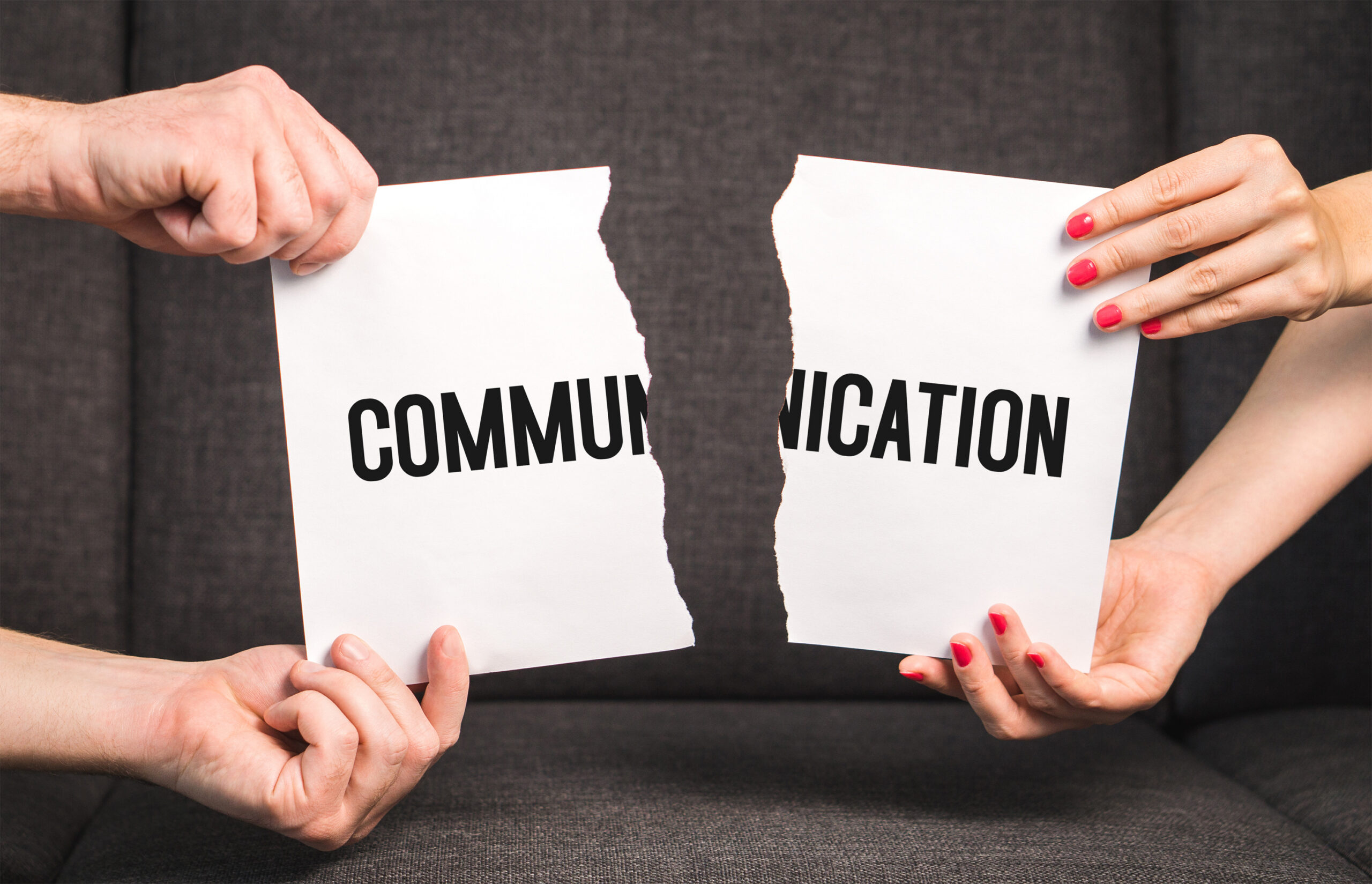
Steve Macaulay and David Buchanan argue that strategic communication is a core capability, not a soft skill, and L&D and HR must build it for change. From a gym takeover that went silent to practical steps on timing, channels and feedback, they show how two-way messages protect trust and performance.
Communication needs to be managed strategically, and HR and L&D must embed this as a core capability. Strategic communication is the purposeful use of communication by an organisation to achieve its goals, aligning messages, channels, and timing to influence stakeholders and support key objectives, especially during change.
Why strategic communication matters
Communication is an essential element of organisational performance and for successful adaptation and change. Organisational change is inevitable, but successful change isn’t. It rarely fails because of poor strategy, but because the message doesn’t hit home. When communication breaks down, confusion sets in, trust erodes, and resistance hardens. When it’s successful, it binds the organisation together, building shared knowledge and trust.
Communication is not a “soft” function: it has hard consequences
Change creates uncertainty, which can quickly turn to frustration and resistance, especially when people feel left out or left behind. That’s why communication is not a “soft” function: it has hard consequences.
For L&D professionals, this is both a challenge and an opportunity. Communication isn’t just a skill to be trained once and forgotten. It’s a core organisational capability that L&D must help build, embed, and sustain—especially during change.
A case in point: How not to communicate
Take the example of a well-regarded local gym, recently acquired by a large national chain. The new owners began rolling out their own business model but never explained it. Two months in, there was still no full official communication with gym members or staff.
Employees didn’t know the plan, only that roles were changing and some jobs were at risk. Gym members were left in the dark, and the only answers they got were, “We haven’t been told either.” Staff grew frustrated—not only with management, but also with customers asking questions they couldn’t answer.
Members drifted away. Loyal staff started applying for other jobs. Service standards deteriorated. The gym’s competitive advantage disappeared—not because the new business model was flawed, but because communication failed.
For L&D professionals, this is more than a cautionary tale. It’s a case study of what happens when strategic communication capabilities are neglected.
What L&D needs to embed
Most organisations offer communication training, but too often as a one-off workshop, disconnected from real-world pressure points. L&D’s job is help turn communication into a living, breathing capability that supports people at all levels. Here’s how:
- Assess and agree communication strengths and weaknesses
Are your managers prepared to address resistance? Can they engage, not just inform? Do they know how to tailor messages to different audiences? - Train for real situations
Go beyond theory. Use role play, simulations and observation to prepare people for the messy, emotional reality of real conversations. - Focus on the sharp end
Line managers and team leads are the face of change for most employees. Are they equipped to deal with questions, ambiguity, and emotion? - Model the behaviour
Leaders must be supported to be recognisably the people you want them to be: to listen well, share uncertainty honestly, and stay visible. - Build two-way feedback loops
To function well, people want to be heard, not just told. Create space for feedback and ensure decision-makers are listening.
When to communicate? Now!
Think of a delayed flight. You’re stuck at the airport. No information. No updates. No one who knows anything. Even a vague update of “We’re still waiting for clearance, we’ll know more in 30 minutes” can calm people.
The lesson? You can’t communicate too early. In fact, it’s rarely possible to start soon enough. Even if you don’t have all the answers, say: “Here’s what we know. Here’s what we’re still working on. Here’s when you’ll hear more.”
Silence is not neutral—it creates anxiety and invites assumptions. Communication is often more about reassurance than certainty.
What to communicate?
Start with your target’s point of view: What do they want and need to know?
Most stakeholders—whether employees or customers—are asking the same questions:
- How will this affect me?
- Will I still have a job? Will my job change?
- Will the services I use still be available?
- Will prices go up?
These aren’t trade secrets. They’re reasonable concerns. If you must keep details confidential, say so—and explain why. But don’t dodge the conversation. The key is not to under-communicate. In change, repetition is not annoying—it’s necessary.
How to communicate?
Different audiences need different channels. Consider the media richness hierarchy:
- Face-to-face is rich and responsive—ideal for sensitive or complex information
- Email and apps are fast and scalable—but less personal
- Leaflets or notices are quick but limited in depth
You need a mix of approaches:
- For staff: team briefings, one-to-ones, live Q&As
- For customers: updates on-site, via email, through the app
But for any channel, make sure your tech works and the message is consistent.
Who should communicate?
You might think this is a top management job, or a specialist function such as HR or Internal Communications. But on a Monday morning, customers see the receptionist, not the CEO. Employees ask questions of their direct manager, not a board member.
That’s why everyone, especially front-line staff, needs to be briefed and confident. The person at the desk or on the gym floor may carry more communication weight than anyone in head office.
Embedding the capability
One-off workshops aren’t enough. Make communication under today’s changing conditions a habit:
- Refreshers: Just-in-time updates when change hits
- Microlearning: Bite-size tips to handle specific uncertainty or difficult questions
- Peer Learning: Spaces to share what works
- Coaching: Support managers as they make their way through complex situations
Tracking effectiveness
Don’t assume communication has happened just because a message was sent. Check:
- Was it received?
- Was it understood?
- Did it change behaviour?
Use quick pulse surveys. Look at engagement and retention data. Listen in team meetings. Make feedback visible and valued.
The wider risk
When communication fails, it’s not just that people leave. They talk. Employees post on Glassdoor. Customers share their frustrations online. Reputation, hard to build, easy to lose, can unravel quickly. This is why communication must be seen not as a one-time hygiene activity, but as a strategic capability.
A quick L&D audit
Is your organisation communication-ready? Some questions to consider:
- Have key staff had recent, scenario-based training in communicating during change?
- Are managers skilled in handling emotion and resistance?
- Is communication built into leadership development and onboarding?
- Are channels backed by real skills: listening, empathy, clarity?
- Do people feel safe to speak up and be heard?
Strategic approach
Strategic communication in a changing world must be:
- Timely (When? Now)
- Relevant (What? What they need to know)
- Thoughtful (How? Right mix of channels)
- Inclusive (Who? Everyone, especially the front line)
L&D and HR have a strategic role: to ensure communication is not left to chance. If the gym chain had done this, the story might have ended very differently.
Steve Macaulay is an Associate at Cranfield Executive Development. He can be contacted at: s.macaulay@cranfield.ac.uk
David Buchanan is Emeritus Professor of Organisational Behaviour at Cranfield University School of Management. He can be contacted at: david.buchanan@cranfield.ac.uk
