
New to L&D

My book ‘AI for People Professionals’ was a human-first experiment


Behind the pages of a book shaped by humans and machines, Erica Farmer shares the creative highs, challenges and lessons from writing ‘AI for People Professionals’. From neurodivergent-friendly workflows to AI-supported thinking, it’s a candid look at what it means to write about the future of work in real time. When I started writing my book AI for People Professionals, I had no idea how much of a creative, emotional and intellectual rollercoaster it would be. This wasn’t just a…
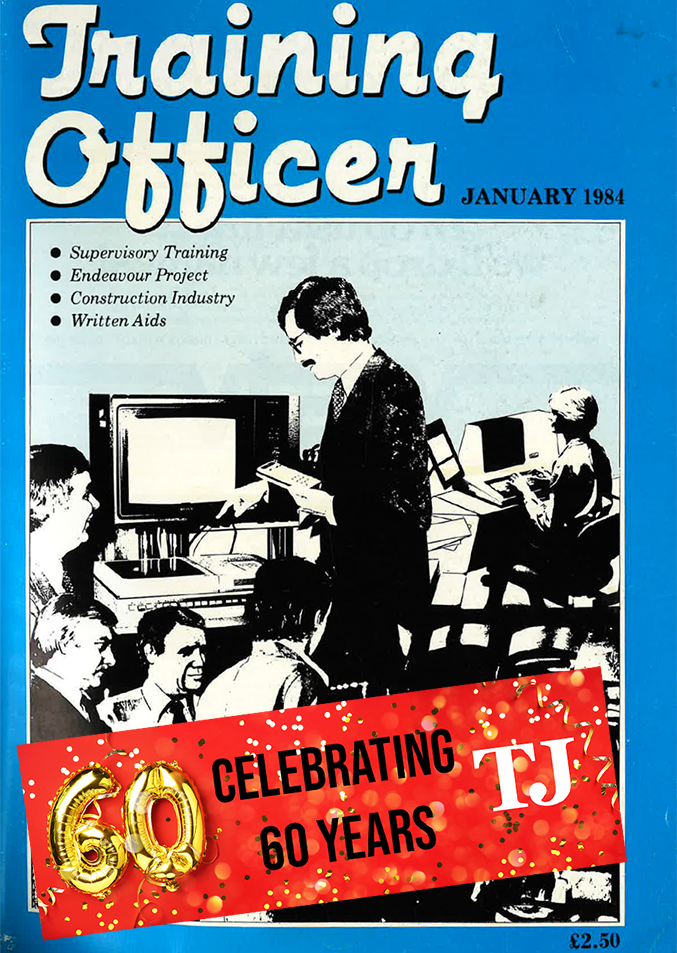
The Training Officer 1980s magazine snippets
From youth training schemes and battles for women in engineering to microcomputers in the classroom, 1980s Training Officer pages show L&D wrestling with technology, equity and unemployment, while trying to keep learning human, practical and hopeful in the face of policy experiments and rapid workplace change for people at work. The 1980s snippets from Training Officer capture a profession wrestling with inclusion, mass youth unemployment and the first wave of digital transformation… all at once. On the January 1984 pages,…
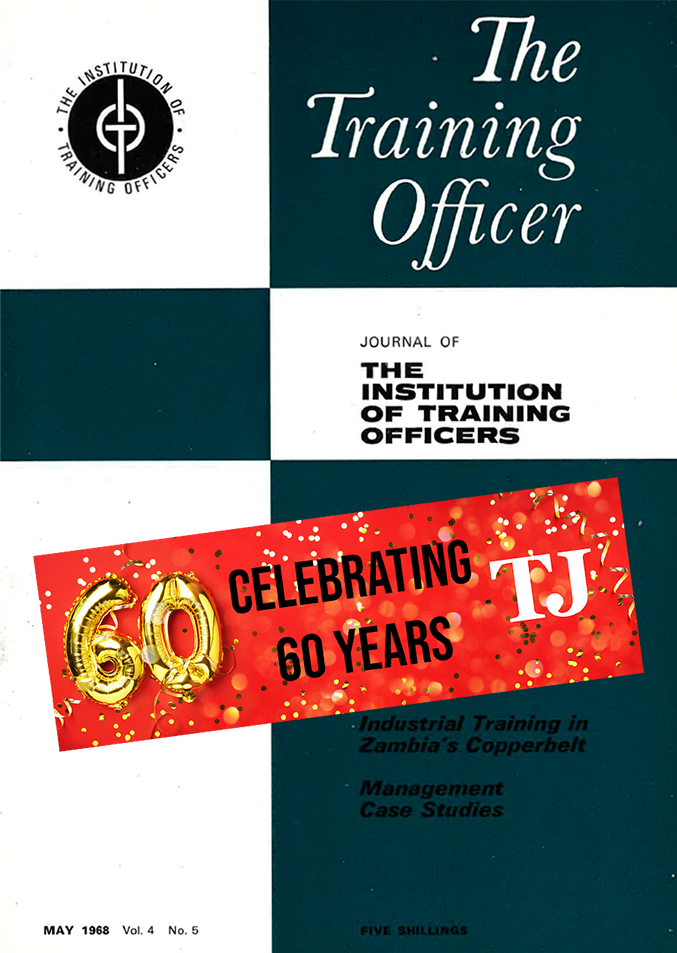
The Training Officer 1968 magazine snippets
From critical path diagrams and formal standards to televised training and overseas schemes, The Training Officer in 1968 shows an L&D profession preoccupied with order, technology and status. Through today’s lens, its worries about credibility, media hype and meaningful impact feel familiar, and sometimes uncomfortably unfinished. Dive in and explore! This time, rather than a full magazine, this is some selected articles from a few issues in 1968. What jumps out first is how professionalisation obsessed the 1968 issues are.…
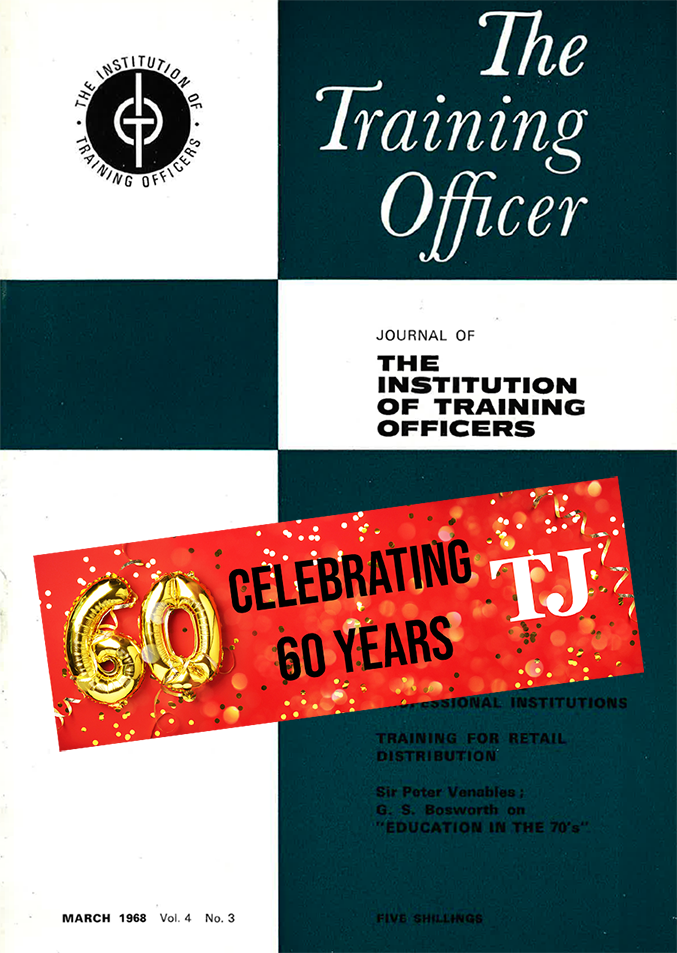
The Training Officer March 1968
In March 1968, The Training Officer captured a profession coming of age. Between log books, training boards and debates about education’s purpose, the issue reveals how industrial-era concerns about standards, governance and real performance improvement still echo through today’s learning strategies, data systems and skills conversations for L&D professionals worldwide. The Training Officer magazine from March 1968 is the second scan from the archives to celebrate 60 years of TJ’s work in learning in development. It feels like a snapshot…

Learning without limits: 38 years outside the HR bubble
Andy Candler has spent nearly four decades in L&D without setting foot in an HR team, and he thinks that’s exactly why it’s worked. In this refreshing and honest take, he champions a commercial, customer-focused approach to learning that’s more about storytelling and sales than tick boxes and training plans. At a recent learning event the conversation turned to L&D, its alignment with HR, and the usual comments about people strategy and employee engagement. It got me thinking about my…

Stop reporting and start persuading: Unlock the potential of your learning data for business impact
Most L&D teams collect data, but few translate it into the business language that decision-makers value. iSpring’s global survey reveals a “translation problem” holding many teams back. Tanya Galton shares insights into three L&D maturity clusters, along with practical steps to boost your influence, impact, and alignment with business priorities. Are you being heard in the boardroom or are you overlooked when L&D budgets are allocated and cut? When you lead or manage L&D in your company, understanding the level…

Editor’s blog: Beyond inspiration, the why of reflection at conferences
Jo Cook shares the thinking behind the TJ 60th Anniversary Conference and why reflection and action planning are central to its design. Drawing on expert insights and her own experiences, Jo explains how making space for thought can transform a good event into one that drives real change and learning. “Reflection is essential for professional competence development in every profession”, stated Alberto A. P. Cattaneo, and from the very first imaginings of a TJ conference I wanted to ensure that…

The human side of AI: Why wellbeing is the next core capability
Artificial Intelligence is reshaping work at speed, but human wellbeing is struggling. TJ Conference speaker Tom Bryant explores how L&D can take the lead in building wellbeing as a skill, designing more human-centric workplaces and using AI with intention to support emotional intelligence, resilience and adaptability in the modern workplace. Artificial intelligence is transforming the workplace faster than most of us imagined, taking on administrative, analytical and repetitive tasks with astonishing speed. Yet while AI is supposed to lighten the…

From AI to ADHD: designing learning for every mind
Learner outcomes are dropping, and AI is being hailed as the fix, but technology alone won’t solve a broken approach to learning design. TJ Conference speaker Sascha Evans argues that L&D must flip the script on inclusion and adopt a proactive mindset to support diverse learners from the very beginning. This week, Google published a white paper laying out their vision for the Future of Learning. Their research shows that learner outcomes have dropped sharply worldwide, and UNESCO projects a…

TJ podcast: Beyond courses: How AI transforms L&D into a strategic business partnership – episode 328
In this episode, Josh Bersin, Erica Farmer and Laura Overton join Jo Cook to unpack how AI is shifting L&D from static courses to adaptive support. They explore dynamic content, practice with AI coaching, and why learning teams must redefine impact in terms of performance, relevance, and real business value. Key takeaways: Created by CleanVoice Podcast summary: Created by CleanVoice and edited by ChatGPT Jo Cook, Erica Farmer, and Josh Bersin explore how AI is reshaping learning and development from…
Want smart, useful L&D insight in your inbox (without the fluff)?
Subscribe to our weekly newsletter for Editor-only commentary, and exclusive insight that isn’t published anywhere else online.
If you want a quick roundup of what matters, fresh ideas you can use, and the best new reads from Training Journal, this is where it lands
It’s free, only takes a minute, and you can unsubscribe any time.
