
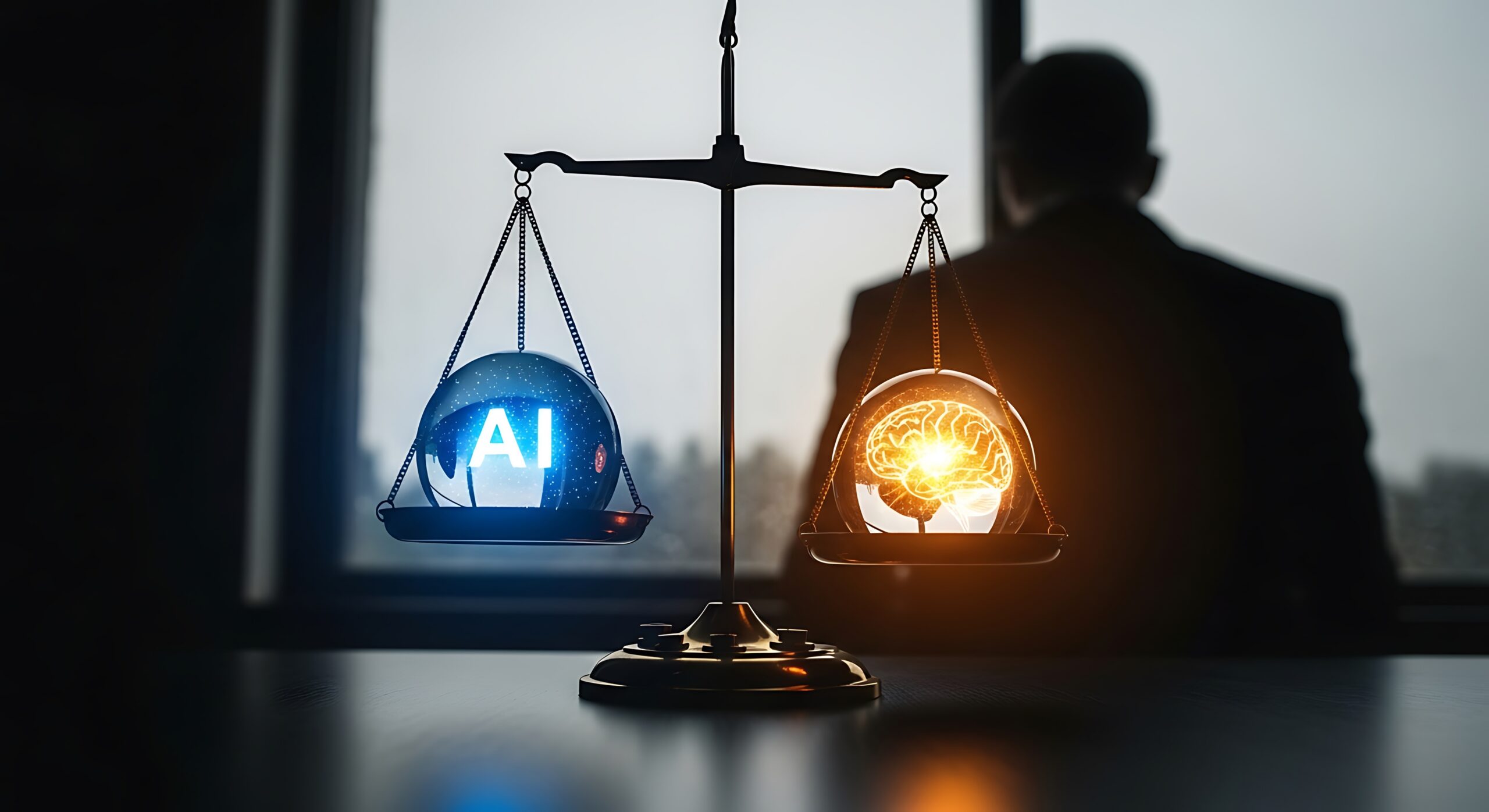
We know that AI is already reshaping how we learn, work, and adapt. The danger for L&D is choosing to stand still. Giles Smith explores how personalised, contextualised learning can close skills gaps, support educators, and help businesses turn training into growth, boosting opportunity and resilience for a better future.
AI has quietly taken over my daily life. It’s woven itself into my routines so seamlessly that I barely noticed, until I realised how much I rely on it. I say this not as a negative, because in truth, AI has empowered me. It’s my personal assistant, living in the most useful device I own: my phone.
The real risk is people and businesses choosing not to embrace it
I was recently on a learning podcast, discussing job risks, opportunities, and the future of work. What struck me most was that AI isn’t the threat. The real risk is people and businesses choosing not to embrace it.
AI empowered learning
In 2023, Khan Academy launched Khanmigo, an AI-powered tutor and teaching assistant that could guide students through math problems, help them write essays, debate history, and even assist teachers with lessons. Students responded by asking more questions, engaging more, and learning in ways that felt tailored to them. They didn’t just adopt AI, they reimagined what learning could be.
We are now seeing AI step into education not as a replacement, but as a partner. It’s helping teachers identify struggling learners earlier and freeing up time to focus on what matters most: connection, curiosity, and creativity.
Imagine a future where every learner has access to a personalised mentor. Where learning is no longer confined to classrooms or curriculums, but happens continuously, fluidly, and intuitively. We’re moving from standardised education to intelligent learning ecosystems.
The pace of change is relentless. Emerging technologies, shifting job roles, and evolving industries mean that learning can’t stop at graduation. As we look ahead, one truth becomes clear: AI skills development isn’t just a business priority, it’s a national imperative.
A gap to close
The UK faces a paradox. Despite growing awareness of the need for upskilling, L&D investment has declined over the past decade. At the same time, organisations are spending more on generic, off-the-shelf content. This shift has created a gap. Businesses are investing in learning, but not always in learning that moves the needle.
To unlock growth, we need to move beyond one-size-fits-all training. The future lies in personalised, contextualised learning that AI provide. Content that reflects the unique goals, culture, and challenges of each organisation, turning training from a cost centre into a growth driver.
The UK’s growth is being held back by skills mismatches and underinvestment in training. Research reveals that gaps in career transitions, from education to employment, are costing the UK billions annually. That includes delays in moving from education into work, disruption from automation, and reskilling gaps.
Scarily, over a million young people are not in either education, employment, or training. These figures aren’t just statistics, they’re a call-to-action to politicians and business leaders.
Developing work skills
To build a resilient workforce, we must bridge the gap between education and employment. That means embedding real-world skills into curricula, supporting educators with tools and time to focus on curiosity, critical thinking, and adaptability, and creating flexible pathways that allow learners to move seamlessly from school to work.
This transition isn’t just a policy challenge; it’s a cultural one. We need to use AI to allow us to reimagine learning as a lifelong journey, not a one-time event.
For businesses, this is a moment to lead. By investing in AI upskilling, not just content, we can build more agile, innovative teams, attract and retain top talent, and drive measurable impact aligned to strategic goals.
For the UK, it’s a chance to unlock growth, widen opportunity, and future-proof the workforce.
So, the question isn’t whether we can afford to invest in AI. It’s whether we can afford not to.
Giles Smith is CEO of Mediazoo
