Debbie Carter’s editorials, research, events and leadership reveal a distinctive voice in learning and development: commercially aware, people-centred, curious and unafraid of change. Drawing on Debbie’s published writing and memories of working alongside her, Jo Cook reflects on the values, humour and insight that shaped her lasting influence across TJ.
Debbie Carter was the Editor of Training Journal for a long time, then later Editor-in-Chief. After her passing this article captures some of her thoughts and approaches to her work in learning and development, in her own words.
Debbie had a substantial body of work, across magazine editorials, magazine and website articles, and special editions, such as on apprenticeships or skills. There were reports as Director of Research, awards deep dives, event write-ups and so the list goes on. Throughout it all Debbie was unwavering on many points that defined her approach, as well as the editorial stance of TJ then and now.
The focus of L&D
Debbie repeatedly highlighted the need for people professionals to be business oriented and to be a point of insight, support and development for others in our organisations. She wrote about leadership development: “The uncertainty we face these days is such that we have to provide leaders and managers with the resilience and support to help them keep our organisations afloat and productive. They will increasingly look to L&OD people to help them achieve their objectives.”
“Have an informed and intelligent conversation”
Debbie Carter
Debbie wrote in one of her many editorials about the reputation of L&D and how it’s an individual’s responsibility to “understand your organisation and its people – the objectives; the industry in which the business operates; the financials; the marketing and sales strategy, and, of course, its technological infrastructure.” All so that in L&D we have “enough insight and know-how to have an informed and intelligent conversation” with people in our organisations.
This, naturally, also meant working in teams: “As with much in our world the best results come from collaboration, accepting and learning from mistakes and reliable networks to provide data and feedback… As people are central to organisational output, our relationships with others are going to be the factors that will make or break our strategic goals.”
Editorship and research
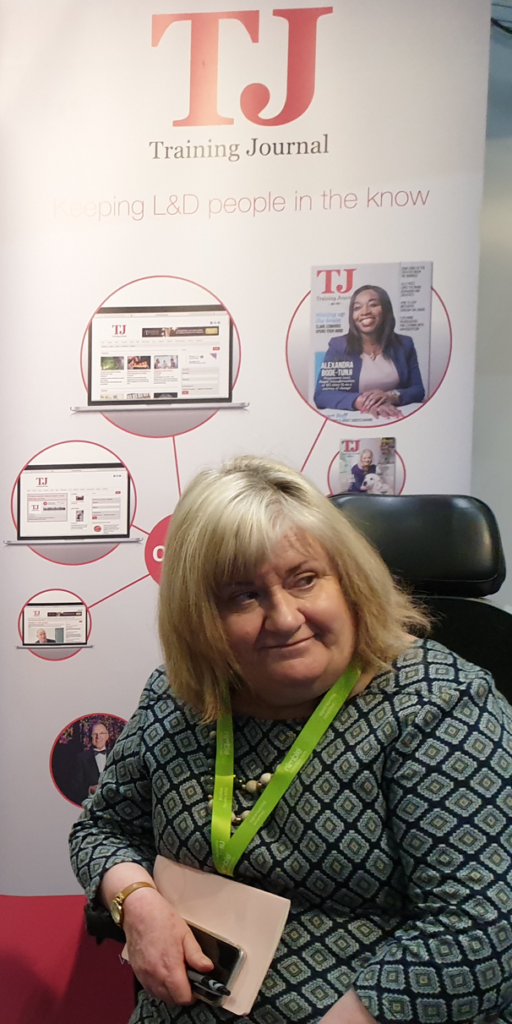
Debbie was Editor of TJ for the first decade of the 2000s, where she expanded the TJ brand to include workshops, an annual conference and awards programme.
In 2010 Debbie moved into the Director of Research role. Her effort and attention were on the future skills of L&D practitioners, titled L&D 2020. She mapped out the project, commissioned new research, and found existing research and case studies to support the project.
“It was a very rewarding project,” she explained later. “We also ran many focus groups about what was emerging, which was a great way to connect with practitioners. So often, you speak to contributors who may be suppliers or thinkers, but not necessarily people working inside large organisations.”
“It gave us a view of what was happening there. For me, it provided enormous insight into the industry and how individuals work within different sectors. That was really valuable.”
In the December 2012 magazine Debbie revealed that “early findings of TJ’s research project L&D 2020 indicated that the skill set of L&D practitioners was changing from a purely transactional process to one that produces transformation by supporting organisations and their leaders in an increasingly complex world”.
“I wonder if our world is so complex and its people so diverse that trying to make sense of it or tie it to a particular set of skills is nigh on impossible”
Debbie Carter
She concluded the article saying, “I wonder if our world is so complex and its people so diverse that trying to make sense of it or tie it to a particular set of skills is nigh on impossible. We need to be comfortable in not knowing all the answers and bold enough to make decisions often based on wisdom, truth and insight.”
At the helm of the good ship TJ
Some may know from the TJ 60th Anniversary Conference in 2025, that TJ has been around for a long time, and Debbie was a huge part of that journey. In a video interview with then Editor Jon Kennard, on retiring as Editor-in-Chief in 2021, Debbie commented about TJ when it was acquired by Fenman in the late 1990’s: “If you think of it today, it’s now a purely digital project. At that time, it was a print-based magazine” which later had “a very basic website and an affiliated online moderated forum called UK HRD. I think it might have been one of the first chat forums in the UK.”
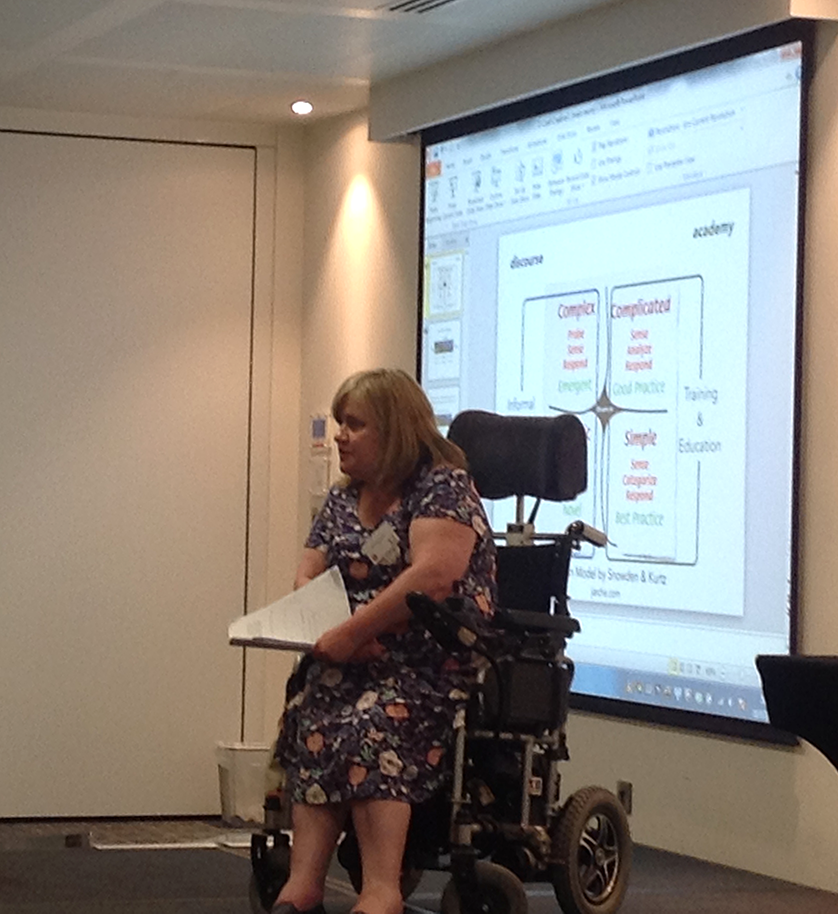
Debbie talked about how TJ developed: “It has changed a lot in the intervening years. It changed name from Training Officer, which it was when we bought it. That was appropriate because everybody who subscribed was either a Training Manager or Training Officer, but we thought it sounded a bit militaristic. We changed it to Training Journal… I think the editorial focus changed as well. Initially, it was very practical, how-to material for trainers.”
She then discussed the more recent audience that use TJ’s resources: “Now we are giving people who are less often called trainers, and more often developers, business partners, coaches, talent professionals and a whole raft of other job titles, different types of skills. It has changed quite dramatically.”
The constancy of change
When Debbie took on the editorship, it was mere weeks after the events of 9/11. “The world was still reeling from the shock and worrying what might follow”, she later reflected. “That catastrophic event marked the start of my TJ journey and, as I mull over the years, I realise that for every year of my time as Editor, there was at least one calamitous event that seriously impacted individuals, organisations and communities.”
In a 2018 editorial, Debbie had commented that “Change is constant and organisations and their leaders need a new set of skills to make the grade today.”
A couple of years later she added that: “Transformation seems to be the favoured word instead of ‘change’ – perhaps the latter is used so much these days we are becoming a little tired of hearing it. Whatever the reason, the pace of change is speeding up and for many of us it is increasingly onerous.”
Debbie often mentioned her family in her writing, continuing, “My children, now in their 20s and 30s, are seriously worried about their future and I try to reassure them that transformation, revolution, change or whatever you chose to call it is nothing new and that if you look back through history there are countless examples of change that have been truly draconian but have been part of an evolution that has led us to where we are today. Love it or loathe it, transformation is a trend that can’t be bucked.”

The joys of technology
My own grandmother once said, “The trouble with having modern grandchildren, is that you have to be a modern grandparent”. Whilst Debbie was working in a field dominated by technology, she was the first to admit she wasn’t the most adept at it.
In recent conversations remembering Debbie, colleague and friend Brian Calvert humorously shared with me: “The last time I saw her was because she had three email addresses and can access A on her laptop but not phone, B on phone but not laptop and the password is locked out, and C not at all.”
“When we eventually managed to reset one, I asked her for a password, and she would say like dE3314)*%\’mgrlvub_yy. I asked, ‘maybe try something a bit less cryptic as this is the 3rd time since Christmas… How about Cornflakes7?’”
Friends and colleagues alike were happy to support and help, laughing at the pickle we sometimes got into, as Debbie did an amazing job elsewhere, with skills, experience and personal relationships we could only ever strive for.
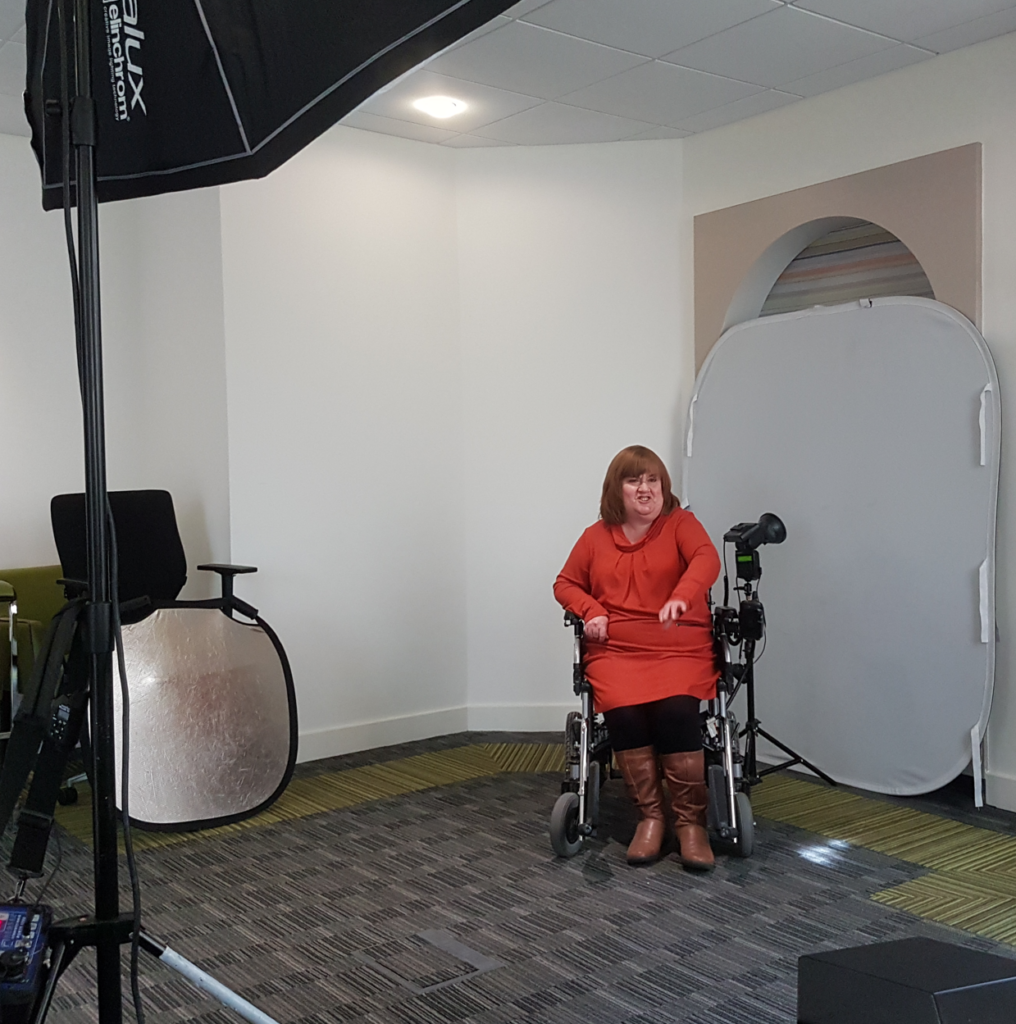
Personal email issues aside, it didn’t make Debbie any less astute about the broader use of technology within L&D, as she wrote here: “The plethora of solutions on show do a pretty poor job of showing what they do to improve workforce capability and add to organisations’ bottom line results. The ‘shiny’ things in themselves do not tell a compelling story of what they offer to the average L&D professional.”
Writing in 2019, before the onslaught of AI and the narrative of human versus technology, Debbie observed: “As a mother and grandmother of children with the usual level of interest in technology, I am confident that my children and grandchildren have good social skills – mainly because they’ve seen them modelled and they’ve practised at home… With increasing use of technology in organisations levelling the competition in product delivery and so forth, the major differentiator will be people, and those people will need exceptional soft skills to mark them apart from the competition”.
Awards and conferences
For many years Debbie led on developing the TJ Awards into the huge black tie annual event it was, with hundreds of people coming together to celebrate learning, performance and the impact they had made for others. Debbie said of the awards: “What inspiring stories they tell – from new apprenticeships to outstanding leadership, they all offer a valuable look into what is happening in L&D departments and organisations today.” And of actually putting in an entry: “Submitting one’s best work for professional scrutiny is a brave action in my book.”

Of the gala event itself: “At the weekend, a chance encounter with an understated black dress in the Laura Ashley sale forced my hand and I bought a new outfit for the TJ Awards 2019 Gala Dinner. As a woman of a certain age, I don’t get out that much to the sort of ‘do’ where formal dress is de rigeur.”
“For many of the ladies attending the Gala Dinner, the dress code is one of the highlights, that opportunity to pull out all the stops to make an impact. And I must say our gentlemen guests look very smashing too!”
Along with the evening awards, Debbie and colleagues organised a conference every year, always with an on-point theme and interesting guest speakers exploring the current and future L&D landscape. It was at many of these events my relationship with Debbie grew. She asked me to attend, Tweet, document and write up, as she couldn’t do all of that and run the event. Having put together, last year, the first TJ conference in a while, I can understand how she felt!
At last year’s conference celebrating the 60th anniversary of TJ, Debbie and her daughter Ellie were in attendance. Debbie commented to me later, “Congratulations on a great day yesterday – it was so good! The venue, the food, the people and it was all down to you! You must have worked tirelessly to make it such a memorable festival of learning!” From someone with such experience and a good eye for detail, I knew I had lived up to her standards.
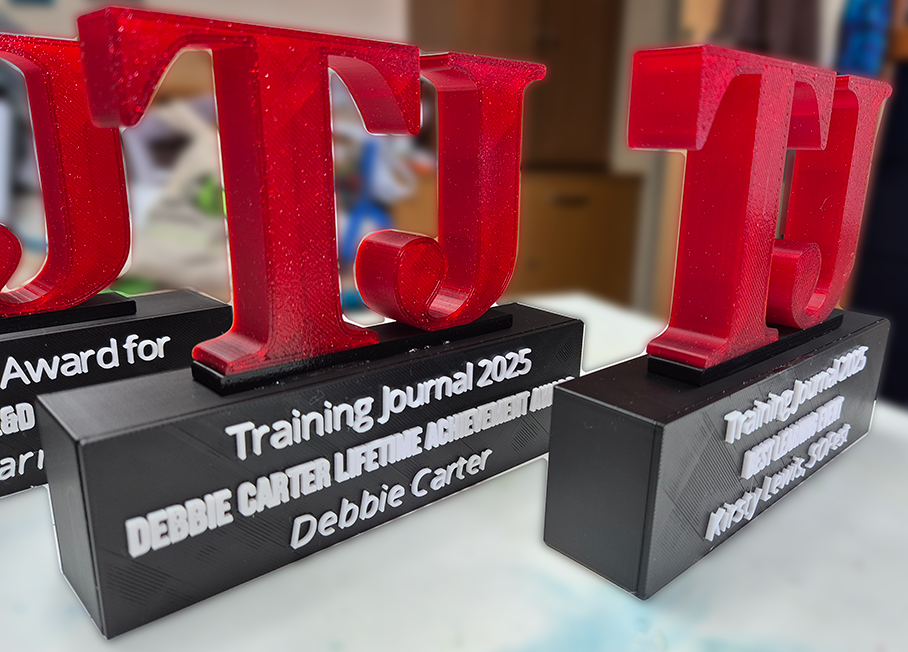
Whilst the TJ Awards stopped running around the time of the pandemic, I was keen at the 60th anniversary to at least have a nod to our past, and presented some mini awards.
The last, and the most important to me, was an award I had decided to call the Debbie Carter Lifetime Achievement Award. I presented it to Debbie and will continue to use it in the future to honour her legacy.
Debbie messaged me the next day, saying “Thank you for honouring me – I was very touched. My trophy is on the shelf in the kitchen and looks right at home alongside my cat and jug collection. Thanks for a memorable day.”
Lasting impression

There were many facets to Debbie’s career, personal and professional experiences the drove her perspective as a leader in our space and the impact she has made on TJ and many individuals.
When taking on the role as Editor in 2024, I commented that Debbie’s “legacy and vision are imbued within the digital DNA of Training Journal and I shall do my best to continue the amazing leadership she has shown in our industry.”
Debbie touched all who knew her and you’ll be able to read some of those comments soon. She also felt that way about many others she came into contact with, saying on the video interview: “Everybody has been so supportive and wonderfully innovative in their approaches. I’ve seen all sorts of things over the years and met so many lovely people… It has been a real privilege. As I said before, I’ve enjoyed it immensely.”
For all her dynamism, passion, energy, focus, and sometimes cheekiness, she had some core values that held her well throughout her life and work, revealing: “Paring back all the anecdotes and theories, you could say that motivation and engagement comes down to simply making your people happy”. And she certainly did.
