
Talent & Skills

Setting up learning for success


In the first of two articles looking at how to analyse learning need to establish successful training programmes, Paul Matthews focusses on setting expectations So, you are running a training programme… Why? Somebody has asked for it. Perhaps many people have. Who are these stakeholders and what do they actually want? Or more importantly, what do they expect? What they want and what they expect may well be a little different. If you want your work to be considered a…

How to build social capital
Sally Tanski explores the importance of leaders’ emotional intelligence in growing social capital If you’re a leader, or work with leaders, this situation may be familiar to you… You find it’s difficult to motivate team members, who seem disengaged and distant – and you realise how little you really know about them as people. Or maybe you’ve been struggling with an issue that seems unsolvable until you talk to a colleague over a cup of coffee, for the first time,…

Is goal setting really necessary?
Are you an expert in goal setting or do you prefer to freestyle? Thom Dennis explores the pros and cons of both Goals can guide how we behave and influence a number of factors from performance level to degrees of conflict to the success of leaders. If goal setting helps us to identify what we want to accomplish, create a plan of action, and monitor our progress towards a desired outcome, is there really a downside? Almost certainly a more…

TJ Newsflash: 8 August
This latest roundup of news for those in the talent, skills, learning and development field has been selected by TJ’s editor, Debbie Carter McKinsey survey reveals increase in use of AI Surveys by McKinsey and others have shown an increase in the use if AI in certain organisational functions over the past few years, but their latest research reveals that the use of Generative AI is already widespread and set to accelerate even more. Marketing and sales, product and/or service…

The impact of positive workplace culture
Luke Smith looks at boosting productivity and customer experience by focussing on organisational culture A strong workplace culture is key to the long-term success of your business. A recent survey by McKinsey even found that businesses with strong, positive cultures yield 60% higher returns than their peers. The same report also found that companies with a positive workplace culture are more adaptable. This is particularly important today, as fast-paced markets are changing rapidly in the face of a global economic…

How managers can support workers with mental health problems
Spotting the early signs of mental health issues in employees is vital to ensure recovery and business success. Here Carl Jones looks at the problem and offers advice on helping people recover Society has changed rapidly in the last 20 years. Workplaces that once commanded people’s attention from 9 to 5, five days a week are now a distant memory. The pressure of modern-day living has increased due in no small part by instant access to information via the internet…

TJ Newsflash: 21 July
TJ’s latest summary of news focusses on recent research in the field of talent, learning and development Employers aren’t using AI to its full potential Employees in the UK could save approximately 390 hours of working time per year with Artificial Intelligence (AI) – according to new data commissioned by people analytics company Visier. The data revealed that on average, of those employees already embracing AI in the workplace, Brits are saving 1.55 hours per day. The data comes as…

What does a future employer look like? YOU
At GBS, we aspire to create an environment where our students can explore new possibilities, realise their true potential and make progress towards the careers they want The entrepreneurial spirit is at the heart of everything we do at GBS. We provide students and staff with a platform to discover new ideas and innovations — creating the opportunity to find solutions that elevate our institution and the communities we serve. Many of our students are older and are returning to…
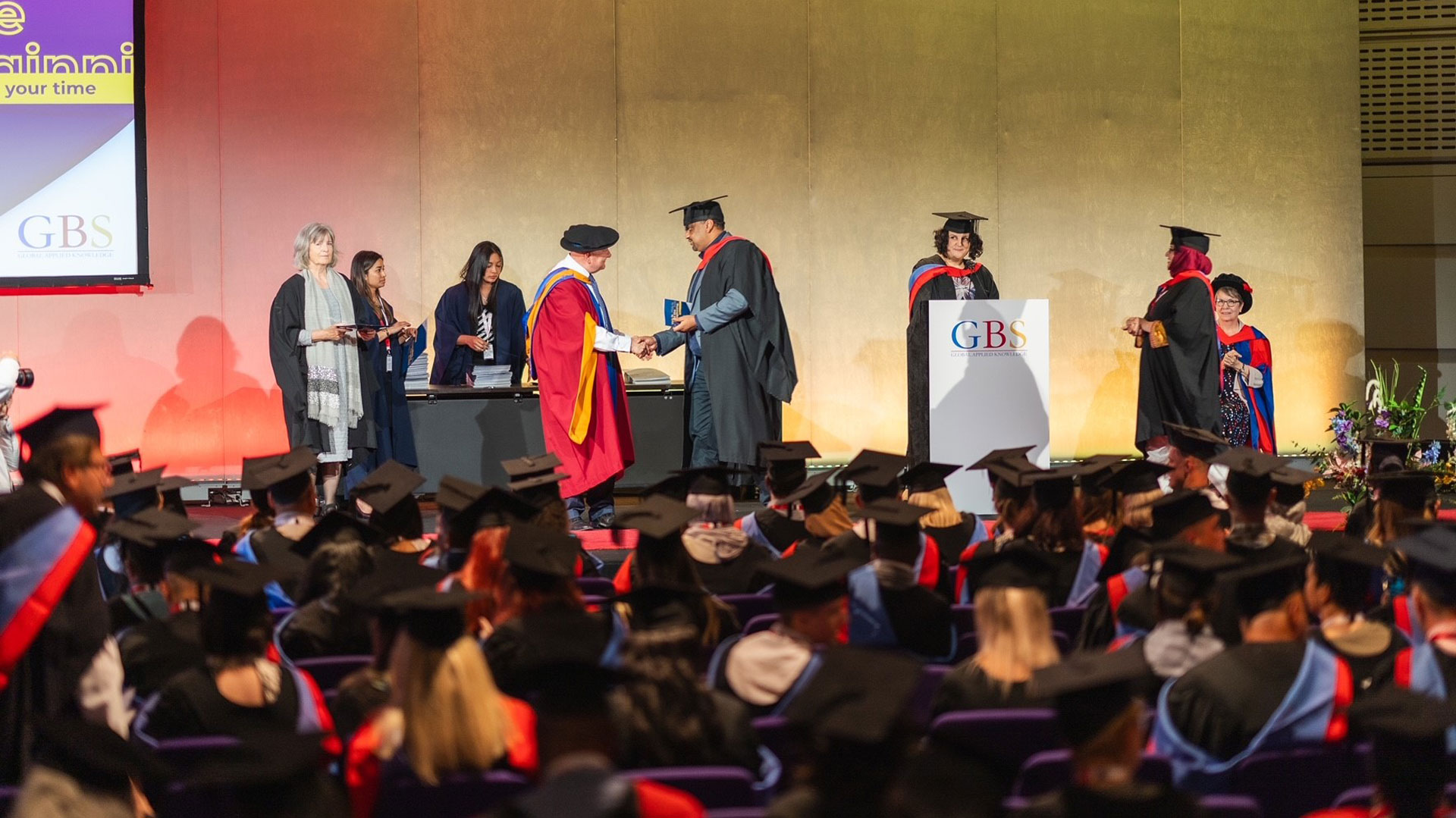
GBS celebrates student success at summer graduation
Global Banking School (GBS) celebrated the success of its students with a graduation ceremony held at the Queen Elizabeth II Centre earlier this month Global Banking School (GBS) celebrated the success of its students with a graduation ceremony held at the Queen Elizabeth II Centre, on Tuesday 11th July. The event marked an important milestone in the lives of these exceptional individuals, who worked diligently to achieve their academic goals, having to balance their studies with a range of commitments including work, family…

The importance of purpose to Gen Z
Camilia Miccolis on why meaning matters in the retention of Gen Z staff and how L&D can help With Gen Z making up around 20% of the global workforce, and growing year on year, employers cannot ignore what this age group values most in the workplace. As a generation of entrepreneurial, digital natives, they are not typically swayed by salary alone, nor the hollow ‘perks’ of pizza parties and beanbags in a modern office. Instead, some things appear to drive…
Want smart, useful L&D insight in your inbox (without the fluff)?
Subscribe to our weekly newsletter for Editor-only commentary, and exclusive insight that isn’t published anywhere else online.
If you want a quick roundup of what matters, fresh ideas you can use, and the best new reads from Training Journal, this is where it lands
It’s free, only takes a minute, and you can unsubscribe any time.
